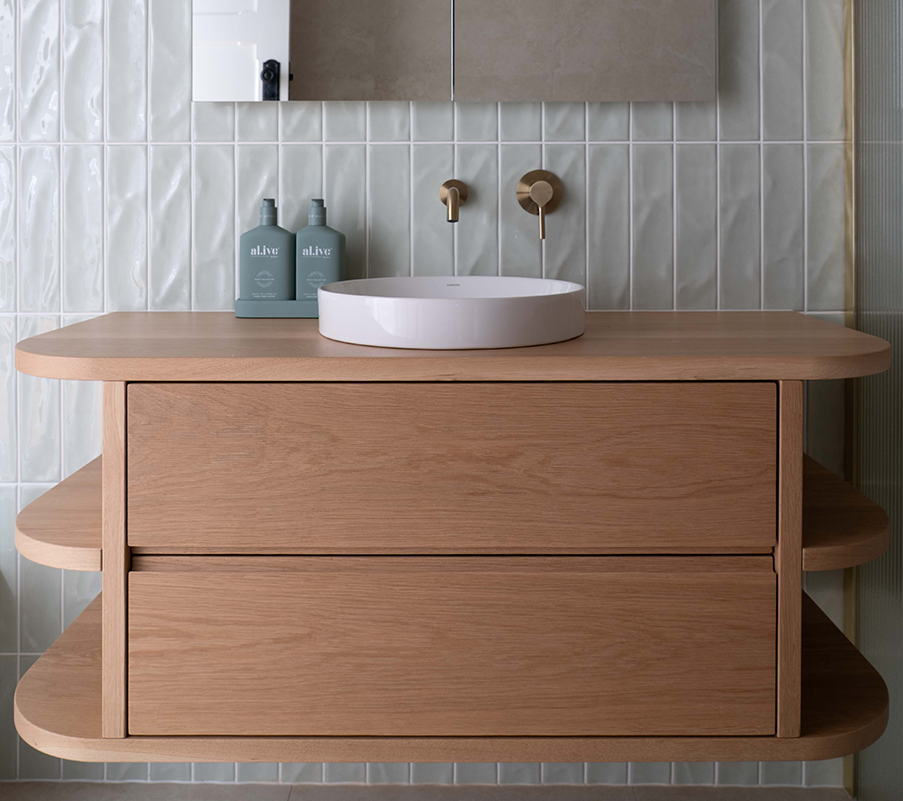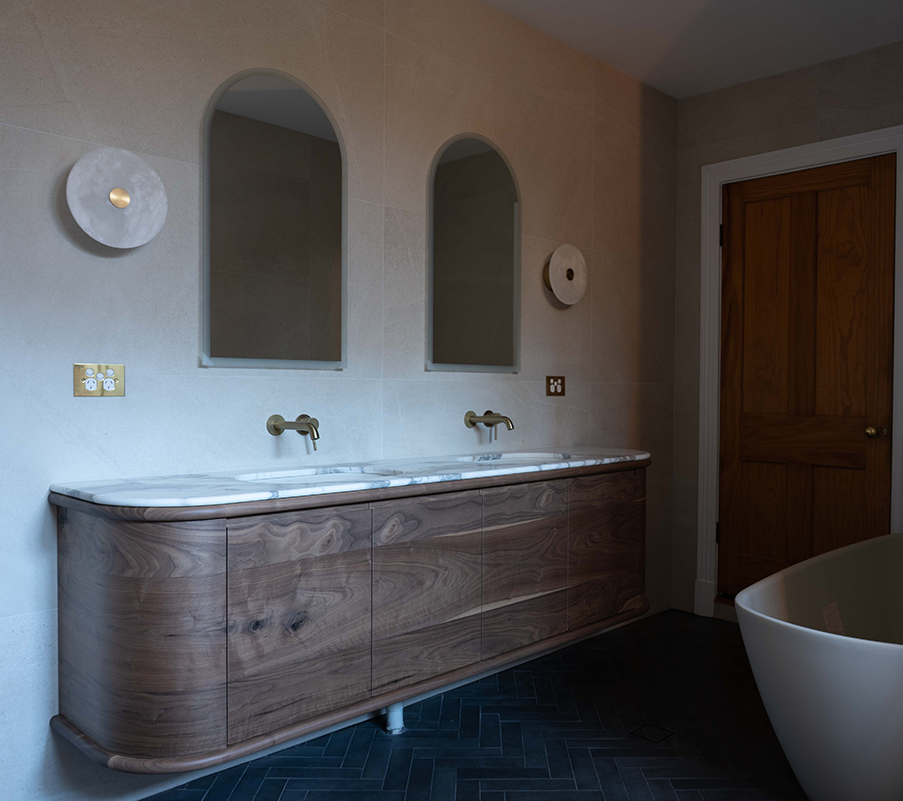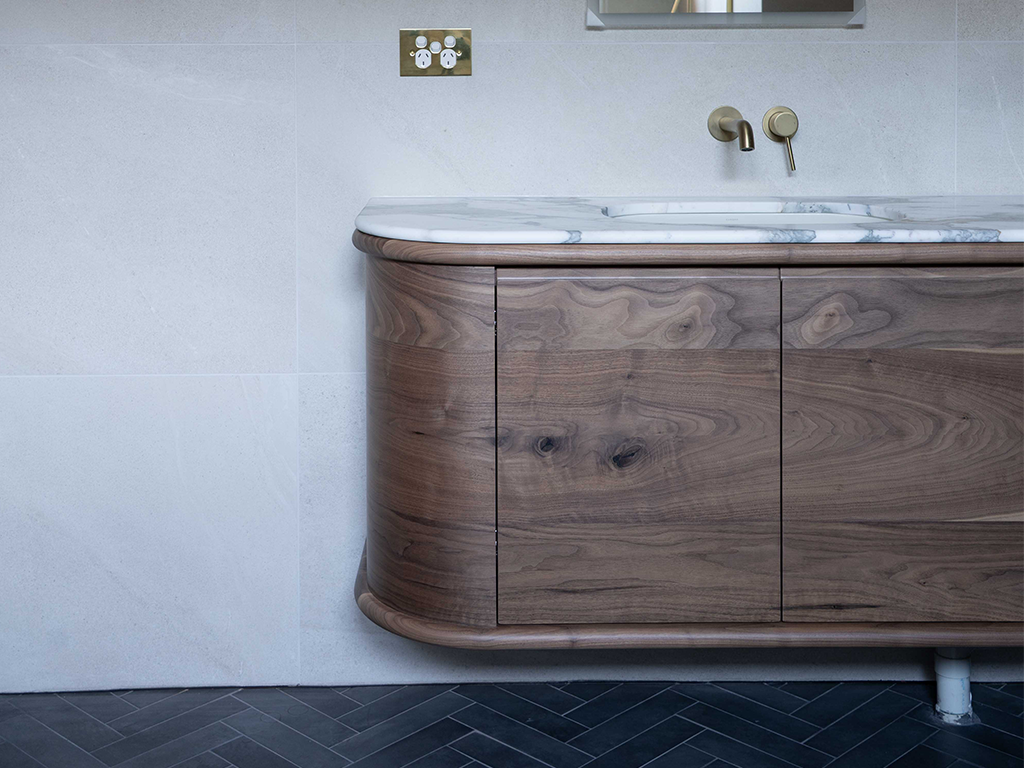
American Walnut timber furniture is the darkest timber we work with, and the most consistent. The deep brown colour suits larger bathrooms and statement furniture pieces, and it performs exceptionally well when sealed for wet areas. It’s the timber we recommend when the furniture needs to be a focal point, not just functional.
Origin and Characteristics
American Walnut (Juglans nigra, often called Black Walnut) is harvested from the Midwest and eastern United States. It’s a premium hardwood with a Janka hardness of around 1010, which puts it in the medium-density range.
The colour is a deep chocolate brown to dark purplish-brown, with occasional lighter sapwood that we either work into the design or cut away, depending on the piece. The grain is straight to slightly wavy, with a fine, even texture. Unlike some timbers that vary significantly from board to board, Walnut is remarkably consistent, which means what you see in the sample is what you get across the finished piece.
Performance Across Different Applications
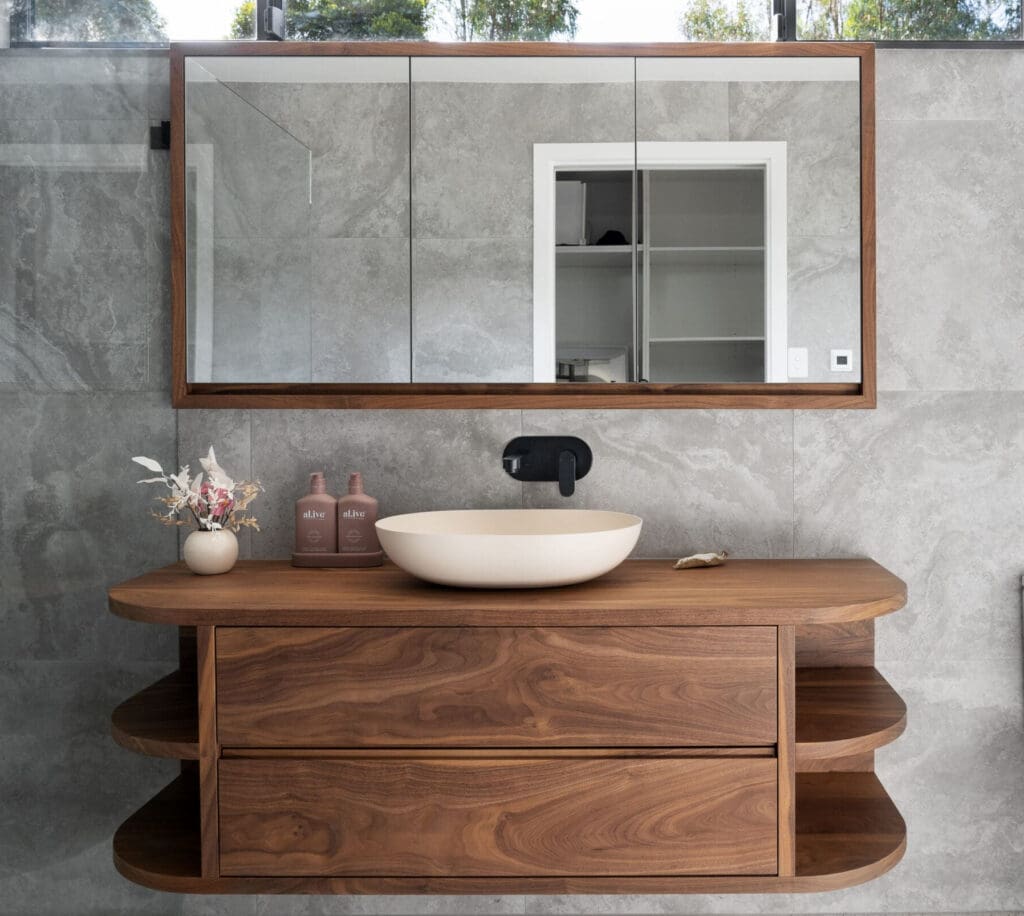
Vanities and Bathroom Cabinetry: Walnut performs exceptionally well in bathrooms. It’s dense, naturally low in moisture absorption, and when sealed with our water-based polyurethane it’s one of the most durable bathroom timbers we work with.
The tight grain structure means there are fewer pathways for moisture to penetrate, even before sealing. Combined with proper polyurethane application, Walnut vanities handle daily bathroom humidity, basin splashes, and cleaning products without issue.
The dark colour suits larger bathrooms and en-suites where there’s enough space to let it breathe. In a small powder room, Walnut can feel visually heavy. It pairs particularly well with brass or brushed gold fixtures, white stone basins, and matte black tapware. If you’re renovating a bathroom where the vanity is the centrepiece, Walnut is hard to beat. Check out our blog on how Timber Vanities react to moisture for more info.
Kitchen Benchtops: Walnut works beautifully as benchtops, though it’s less commonly specified than lighter timbers simply due to cost. Where we do use it, typically in kitchens with white or light cabinetry, it becomes the focal point of the room. The dark surface shows less staining than lighter timbers, which is a practical advantage in kitchens.
Walnut benchtops also hide knife marks and minor surface scratches better than light-coloured species. What would show as a visible mark on American Oak or Tasmanian Oak blends into Walnut’s natural colour variation. For clients concerned about visible wear on kitchen surfaces, this is a genuine advantage.
Furniture and Shelves: For dining tables, sideboards, entertainment units, and credenzas, Walnut is the premium choice. It machines cleanly, holds fine detail, and the colour depth gives furniture a genuine presence. We typically finish with a matte or satin polyurethane, which protects the timber while keeping the natural richness visible.
How Walnut Ages
Walnut doesn’t darken significantly with age, if anything, prolonged UV exposure can lighten it very slightly over the years. The colour you see when the piece is delivered is largely what you’ll see a decade later, which is one of the advantages of choosing a naturally dark timber. The fine, even grain means surface wear is minimal and blends into the timber rather than standing out. Walnut ages gracefully, and well-maintained pieces can look better with time as they develop a natural patina.
How To Maintain American Walnut Furniture
Walnut requires minimal maintenance when properly sealed. For vanities and benchtops, wipe down with a damp cloth after use and clean spills promptly. Use pH-neutral cleaners and avoid bleach-based products or abrasive scrubs, which can wear through the polyurethane over time.
For furniture in dry areas (dining tables, sideboards), dust regularly and wipe with a barely damp cloth as needed. The sealed surface resists water rings and most household spills when cleaned promptly.
Over years of heavy use, the finish around high-contact areas like drawer fronts or basin edges may show wear. When that happens, the surface can be lightly sanded and resealed without replacing the entire piece. This is a significant advantage over veneered furniture, which cannot be refinished once the thin veneer layer is damaged.
Finish Options
Matte polyurethane is the standard finish for Walnut. It protects the timber, doesn’t add gloss, and lets the natural colour show through without alteration. Matte suits contemporary interiors and allows the timber to speak for itself. Satin polyurethane adds a subtle sheen, which can lift the depth of the colour slightly. Good for dining tables and credenzas where you want a touch of formality.
Oil finishes work beautifully on Walnut furniture in dry areas. An oil finish brings out the richness of the timber and feels warm to the touch, but it requires reapplication every 6–12 months. We don’t recommend oil for bathroom vanities or kitchen benchtops due to the maintenance requirements and lower water resistance.
Comparison Of American Walnut And Tasmanian Blackwood
People often compare Walnut and Blackwood because both are mid-to-dark hardwoods with fine grain.
Colour: Walnut is significantly darker, deep brown with purple undertones. Blackwood is lighter and warmer, sitting in the golden-brown to tan range.
Consistency: Walnut is more consistent in colour across boards. Blackwood shows more natural variation.
Cost: Walnut is considerably more expensive due to import costs. If you like the look of dark timber but aren’t committed to Walnut’s price, Blackwood is a practical Australian alternative.
Performance: Both are medium-density hardwoods suitable for cabinetry and furniture. Walnut has slightly lower moisture absorption, making it marginally better for high-humidity bathrooms, but the difference is minimal when both are properly sealed.
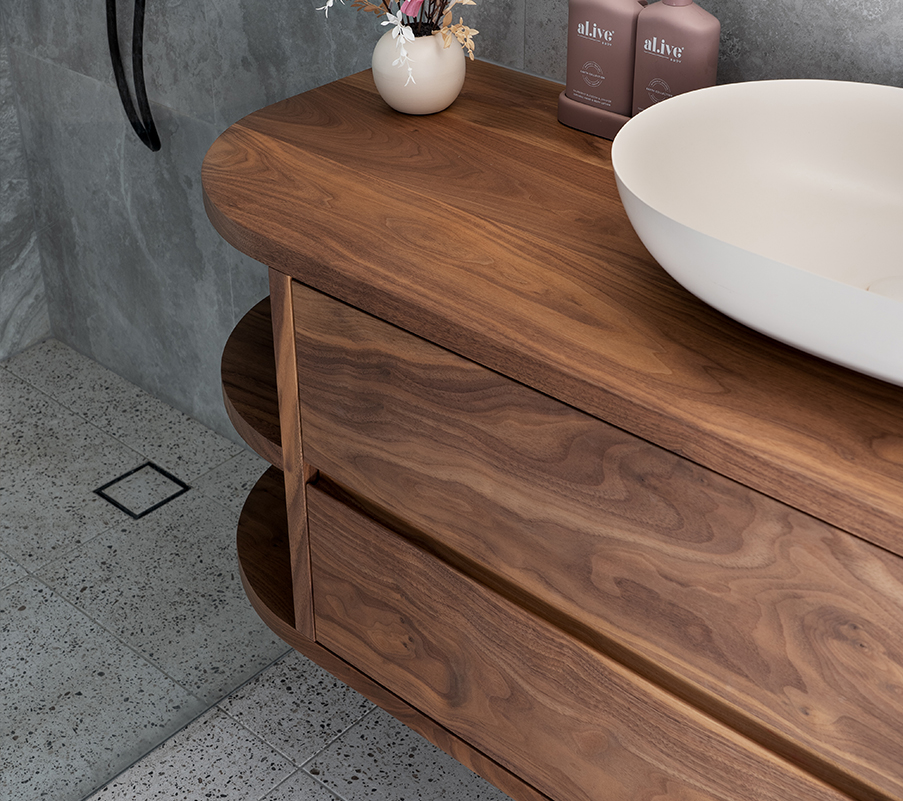
Wall-Hung VS Floor-Mounted Walnut Vanities
Both installation styles work well with Walnut. Both require the same sealing process and perform identically, but the choice affects how the dark timber fits in the space, aesthetic and practical rather than structural.
Wall-hung Walnut vanities create visual contrast between the dark timber and the floor beneath, which can make the vanity feel lighter despite the dark colour. This works particularly well in bathrooms with light-coloured floor tiles. The floating effect also makes floor cleaning easier.
Floor-mounted Walnut vanities feel more substantial and grounded. They suit traditional bathroom aesthetics and larger en-suites where the vanity is a furniture piece rather than a fitted cabinet. If your bathroom has decorative floor tiles you want to hide, a floor-mounted unit covers more surface area.
When American Walnut Is The Right Choice
Choose Walnut if:
- You want the darkest, most premium timber available.
- Your bathroom or kitchen is large enough to carry a dark vanity or benchtop.
- Your budget allows for premium materials, and you want timber that holds its value.
Consider alternatives if:
- Budget is a constraint (Blackwood offers a similar aesthetic at a lower cost)
- Your space is small and you would feel overwhelmed by dark timber.
Not Sure Which Timber Species Suits Your Space?
At STADC Surfaces, we specialise in custom timber furniture for Adelaide homes. We work through timber selection based on your project requirements, not just aesthetics. Hardness, grain, colour, and finish all affect how a piece performs in daily use, and we’ll walk you through what matters for your specific application.
Contact us to discuss your custom timber furniture requirement or visit our Adelaide Hills factory to experience our craftsmanship firsthand.
See how we use American walnut in our timber bathroom vanities and timber benchtops, or request a quote.