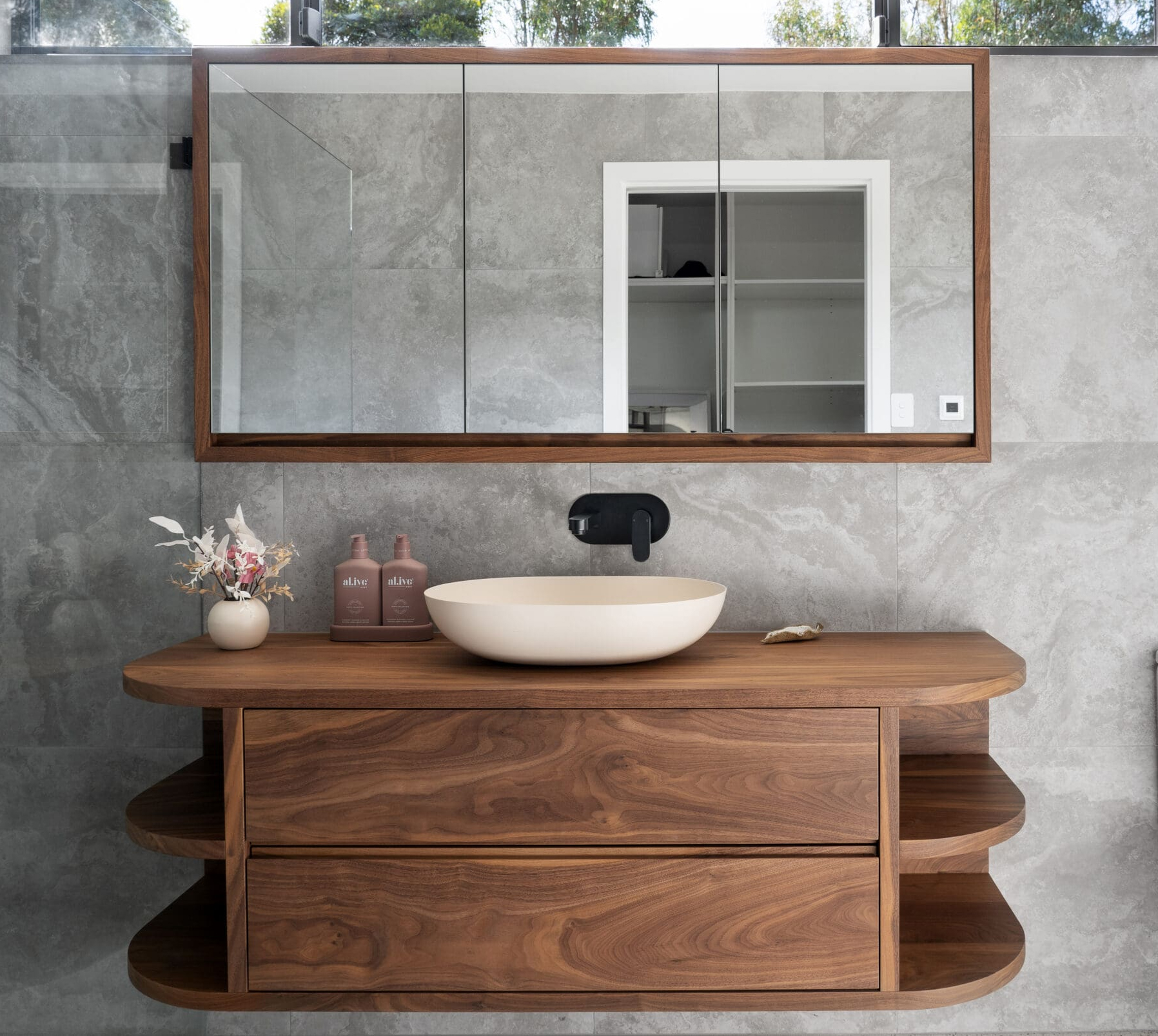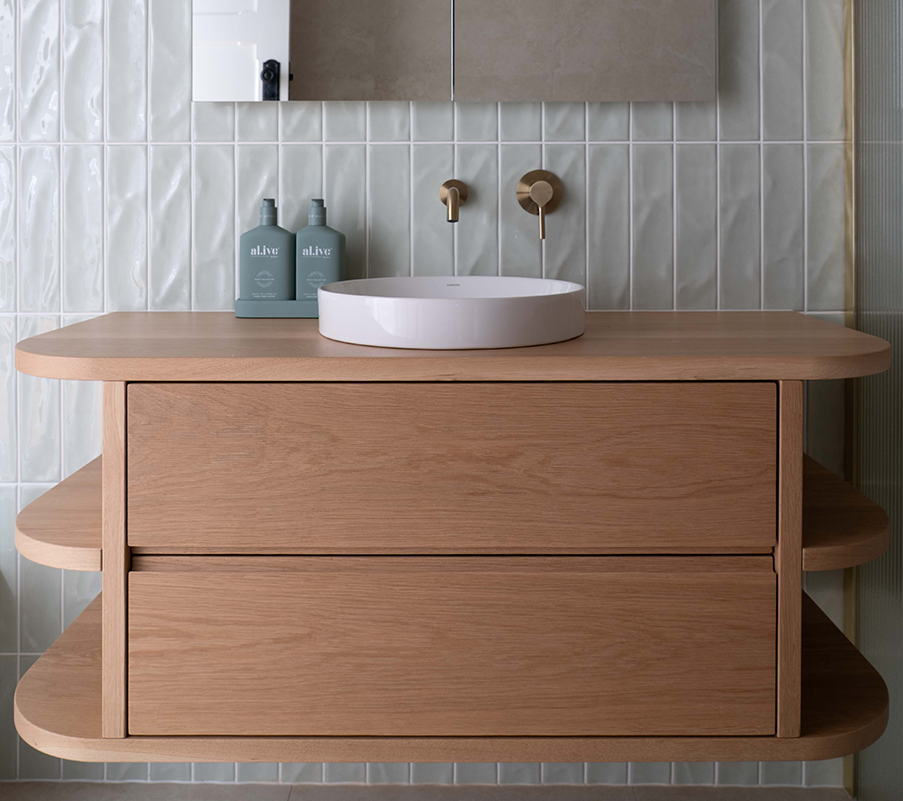
In a well-designed bathroom, the vanity is far more than a practical storage solution. It becomes the architectural centrepiece of the room, influencing proportions, material selection, lighting, mirrors, fixtures, and the overall design direction.
Here’s how to approach a custom timber vanity bathroom renovation from early design considerations and craftsmanship through to material selection and renovation planning.
Why The Vanity Should Lead The Bathroom Design Process
While tiles are often the first material people look at, vanity tends to have a stronger influence on the final result. It sets the proportions of the wall, determines storage layout, and affects where lighting and mirrors will sit. Once it is defined, everything else tends to fall into place more naturally.
In practice, it becomes a reference point for the rest of the bathroom rather than just another item within it. When the vanity becomes the starting point, the finished bathroom feels cohesive, considered, and connected to the architecture of the home.
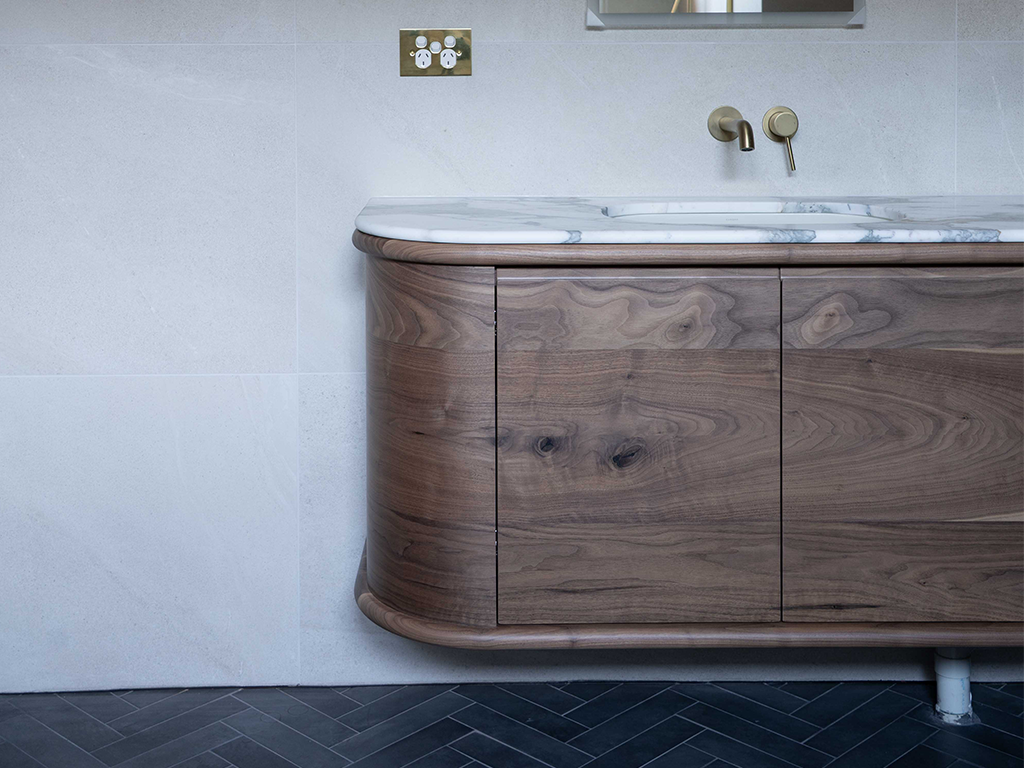
How Opting For Custom Timber Changes The Process
There is a distinct difference between a mass-produced vanity and a handcrafted timber piece created specifically for a space. A bespoke timber vanity allows every dimension, proportion, and detail to be tailored to the room. Rather than forcing the bathroom to adapt to standard sizing, the cabinetry is designed to integrate seamlessly with the architecture.
Timber also brings variation that manufactured surfaces cannot replicate. Grain variation, texture, depth, and character ensure that every piece feels individual. For clients seeking a luxury bathroom vanity solution, the appeal often lies in this combination of craftsmanship, individuality, and longevity.
Wall-Hung Or Floor-Mounted?
A wall-hung timber vanity creates a lighter visual presence and exposes flooring, which can help smaller bathrooms feel less compressed. Its floating appearance works particularly well with contemporary and architectural bathroom design.
A floor-mounted timber vanity reads more like furniture. It provides additional storage capacity while creating a more grounded visual statement.
Neither option is universally better. The right choice depends on the proportions of the room, the architectural style of the home, and the overall design brief.
Choosing The Right Timber Species
Timber selection is one of the most important material decisions within a custom bathroom vanity design. The species you choose influences not only the vanity itself but also the atmosphere of the entire room.
Tasmanian Blackwood Vanity
A Tasmanian Blackwood vanity offers rich variation, natural warmth, and distinctive character. It works beautifully within organic, layered interiors where texture and materiality are central to the design.
American Oak Vanity
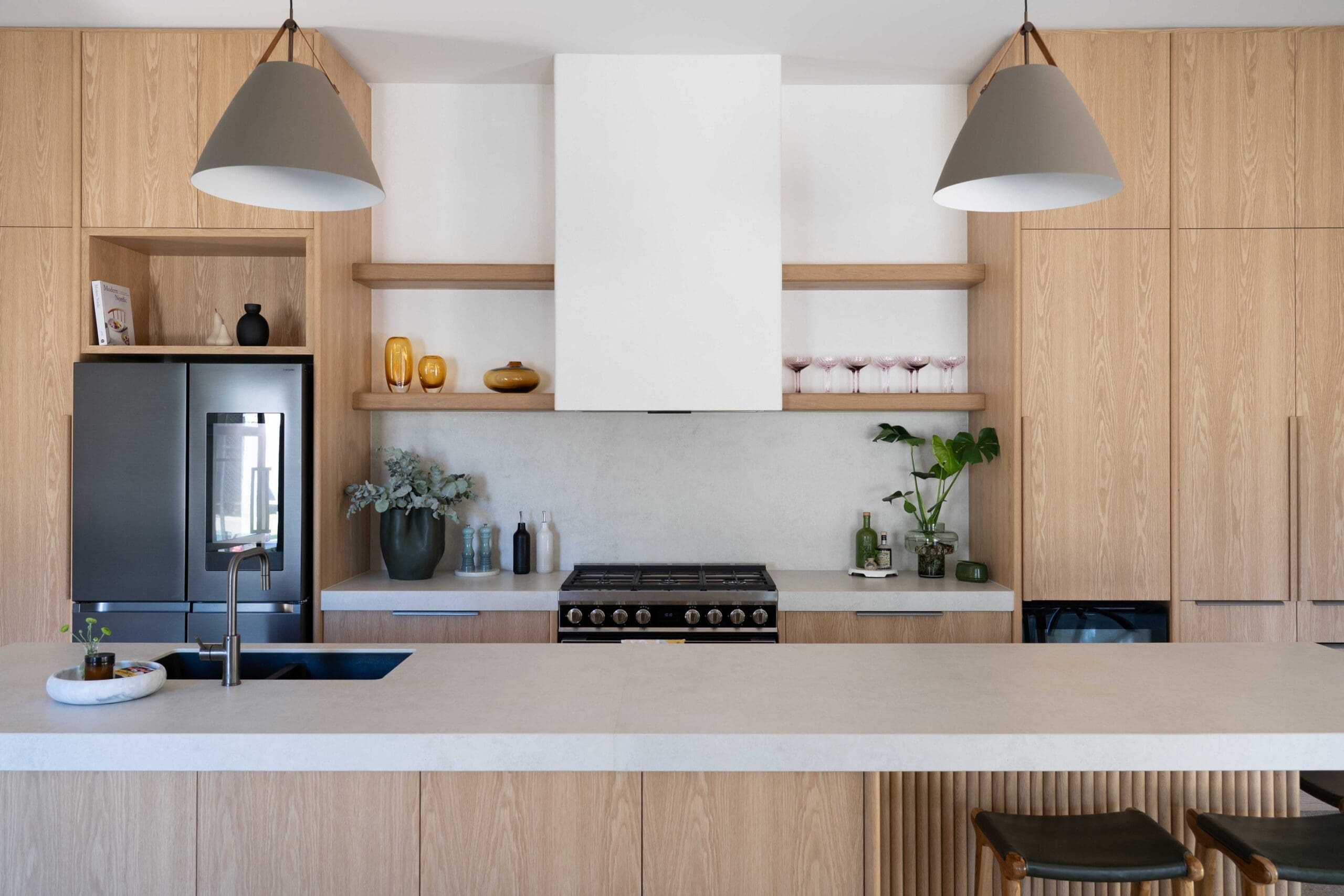
An American Oak vanity delivers a lighter and more refined appearance. Its subtle grain and understated elegance make it particularly well-suited to contemporary architectural spaces and minimalist interiors.
American Walnut Vanity
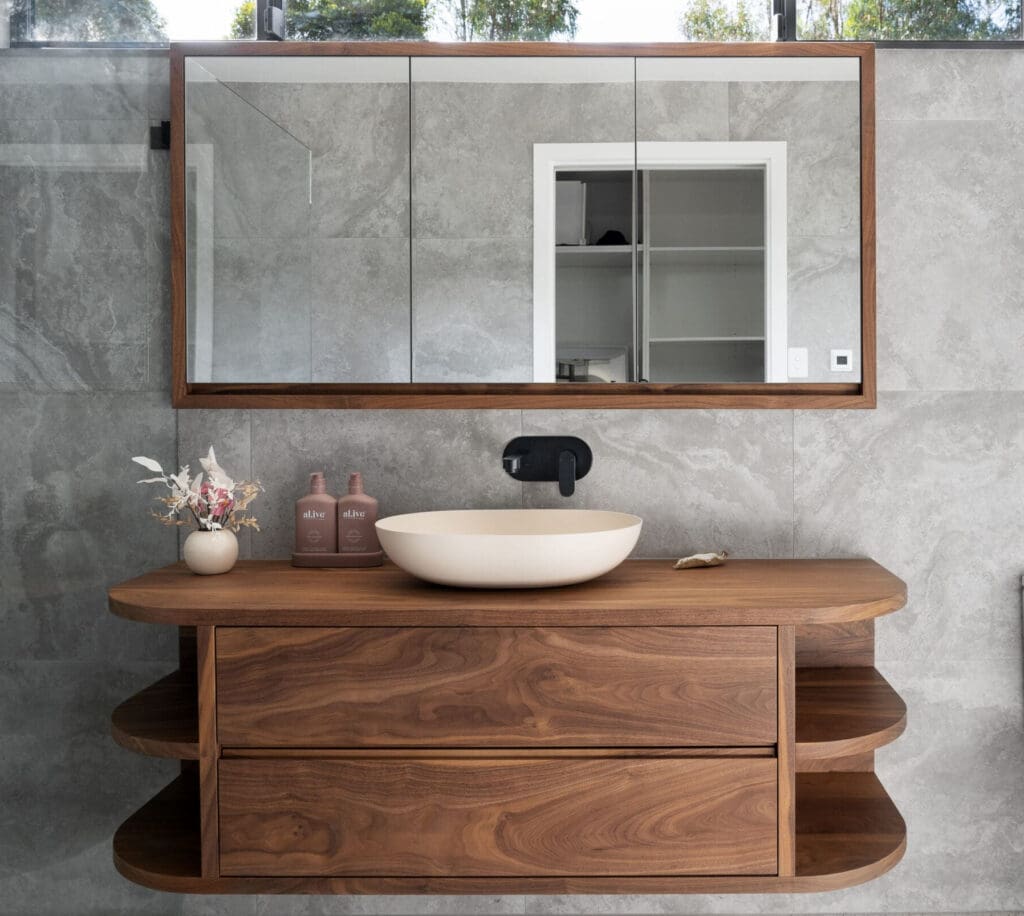
An American Walnut vanity introduces depth, contrast, and sophistication. The darker tones create a stronger visual anchor within the room and suit projects where the vanity is intended to make a statement.
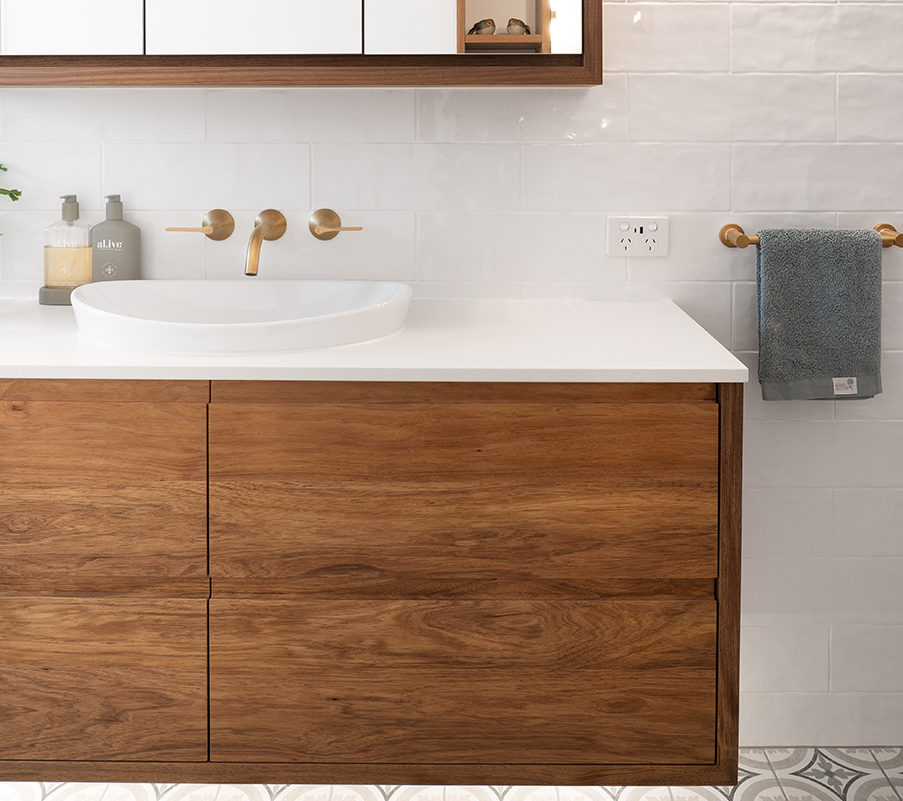
Shaving Cabinets and Overhead Units
When a shaving cabinet or overhead unit is designed alongside a custom vanity, it is best considered as part of the same composition rather than a separate addition later in the process.
Timber varies naturally between production runs, with subtle shifts in grain and tone. Designing both elements together allows these variations to be managed as a single selection, creating a more consistent visual relationship across the pieces.
The result is a pairing that feels intentional and resolved, rather than assembled in stages.
For more on bathroom layouts and proportions, our guide on choosing the perfect double vanity unit explores sizing and configuration in more detail.
Timber Vanity Lead Times And Planning
Unlike mass-produced alternatives, custom timber vanities are designed, constructed, finished, and detailed specifically for each project. Timber vanity lead times reflect the care involved in timber selection, joinery construction, finishing, detailing, and quality control. Every stage contributes to the quality of the finished piece.
The exact timeline varies depending on the design, selected species, workshop schedule, and level of customisation involved. It is thereof recommended to begin conversations around your vanity early in the renovation planning process.
Information To Have Ready Before Requesting A Quote
A clear starting point makes the design process more efficient. Helpful information includes:
- Approximate room dimensions
- Preferred timber vanity size
- Whether a wall-hung timber vanity or a floor-mounted timber vanity is preferred
- Basin style and placement
- Storage requirements and drawer configuration
- Whether a shaving cabinet or an overhead timber unit is required
- Architectural constraints within the room
- Preferred timber species or overall design direction
Having this information available allows recommendations and pricing to be tailored more accurately.
Creating A Cohesive Bathroom
The most beautiful bathrooms are rarely defined by a single tile, fitting, or trend.
They are defined by how every element works together. A custom timber vanity provides the foundation for that cohesion. It establishes the material palette, influences the architectural direction of the room, and creates a focal point around which the entire bathroom can be designed.
Whether the brief calls for a Tasmanian Blackwood vanity, an American Oak vanity, or an American Walnut vanity, beginning with the vanity often leads to a more considered and enduring result.
Once the vanity is defined, other decisions become easier to resolve. Tile layout, lighting position, mirror size, and tapware selection can all be considered in relation to the cabinetry rather than in isolation. This usually results in a bathroom that feels more consistent, because the decisions are connected rather than independent.
Visiting The Workshop Before Finalising
For many clients, some of the most important decisions happen when they experience the materials in person. Visiting our Adelaide Hills workshop helps you compare timber species, assess grain variation, and discuss cabinetry details directly with the people crafting the piece.
Materials that appear similar online can feel entirely different when viewed in natural light.
Seeing the timber firsthand often provides greater confidence when making final design decisions. It also offers an opportunity to better understand the craftsmanship, detailing, and construction methods that contribute to the finished result.
Planning A Bathroom Renovation In Adelaide
At STADC Surfaces, we specialise in custom solid timber furniture for Adelaide homes. The first conversation is usually about dimensions and timing, and we can walk you through what information you need before a quote can be produced accurately.
Visit our Adelaide Hills workshop to see samples of the full range of timber species we work with, or get in touch to discuss your bathroom renovation brief.