Timber floating shelves offer a clean, modern look whilst adding warmth and functionality to any room. Without visible brackets cluttering the design, they create the illusion of timber planks suspended in mid-air. But behind that seamless appearance lies careful planning around sizing, timber selection, and structural support.
Getting these details right means the difference between shelves that look good and function well for decades, and shelves that sag, crack, or simply don’t work for how you actually use them.
Why Type Of Timber Matters For Floating Shelves
Not all timber performs equally well as floating shelves. The species you choose affects strength, appearance, weight, and how the shelves age over time.
Hardwoods work best for floating shelves. They’re denser, stronger, and less prone to warping or sagging under weight. Softwoods might be cheaper initially, but they rarely perform well as floating shelves, particularly in longer spans or where you’ll place heavier items.
The timber’s natural characteristics also influence the final look. Some species have pronounced grain patterns that create visual interest. Others offer more uniform, subtle appearances that suit minimalist spaces.
Best Timber Species For Floating Shelves Adelaide
American Oak: This is one of the most popular choices for timber floating shelves. The light to medium tones brighten spaces without overwhelming them. American Oak is strong enough to span reasonable distances without excessive sagging, and the distinctive grain adds character without feeling busy. It works particularly well in kitchens and living areas where you want shelves to feel warm but not heavy.
Tasmanian Oak: An excellent choice for contemporary spaces. The pale, creamy tones create a fresh, clean look that suits modern interiors. Tasmanian Oak floating shelves have good structural strength, and the even grain keeps the aesthetic minimal. Because it’s locally sourced, it’s often more accessible and can offer better value whilst supporting Australian timber industries.
American Walnut: American Walnut works well when you want the shelves to stand out visually. The rich, dark tones provide strong contrast, particularly against light-coloured walls. It’s strong, dense, and ages well. American Walnut floating timber shelves work well in living rooms or anywhere you want the shelving to be a design feature rather than just functional storage.
Tasmanian Blackwood: Tasmanian Blackwood offers rich golden to dark brown tones with interesting grain variation. Each shelf has unique characteristics, which means your timber floating shelves Adelaide become genuine one-off pieces. The varied tones add depth and warmth to spaces.
Wormy Chestnut: Wormy Chestnut works well if you want rustic character in your floating shelves. The natural markings from native insects create distinctive features that make each shelf genuinely unique. These aren’t flaws, they’re what gives the timber its personality.
Sizing Of Timber Floating Shelves – What Actually Works
Getting the dimensions right makes the difference between floating shelves that work well and ones that look awkward or don’t function properly.
Length Considerations
Short spans (600-900mm): Work well for display purposes such as books, plants, small decorative items. These lengths rarely have structural issues and work in tight spaces like bathrooms, narrow hallways, or alcoves.
Medium spans (900-1500mm): The most versatile length for timber floating shelves. Long enough to be genuinely useful for storage, short enough to avoid sagging concerns with proper support. These suit most living rooms, kitchens, and bedrooms.
Long spans (1500-2400mm): Provide substantial storage but require careful consideration of timber thickness, species strength, and bracket placement. Long floating timber shelves work well for creating feature walls or replacing bulky bookcases, but the structural requirements increase significantly.
Very long spans (over 2400mm): Possible but requires expert planning. You’ll need multiple hidden brackets, possibly steel reinforcement, and careful timber selection. The risk of visible sagging increases, particularly under load.
Depth Considerations
Shallow (150-200mm): Display shelves only. Fine for picture frames, small plants, or decorative objects. Not practical for books or functional storage. These work well in bathrooms or narrow hallways where deeper shelves would protrude too far.
Standard (250-300mm): The sweet spot for most timber floating shelves Adelaide homes install. Deep enough for books, storage boxes, kitchen items, or display purposes. Comfortable proportions that don’t dominate walls but offer genuine functionality.
Deep (350-450mm): Useful for specific applications such as kitchen storage, home offices, or media equipment. These floating timber shelves provide substantial storage but need careful placement so they don’t make rooms feel cramped. Consider ceiling height and how far they’ll project into the space.
Thickness Considerations
Thin (20-30mm): Delicate, minimal appearance. Works well in modern, sparse interiors. However, thin shelves limit what you can install them with (smaller brackets) and how much weight they’ll realistically carry. Best for light decorative use only.
Standard (40-50mm): Most common thickness for solid timber floating shelves. Substantial enough to look purposeful and feel solid, whilst remaining proportional in most rooms. This thickness provides good structural integrity and allows proper bracket installation.
Thick (60-90mm): Creates a substantial look. These timber floating shelves become architectural features. The extra thickness allows for deeper bracket insertion, supporting heavier loads. Works well for rustic or industrial aesthetics, or when you want the shelving to anchor a space visually.
Weight Capacity & Bracket Quality
Floating shelves look delicate, but properly installed timber floating shelves Adelaide can carry substantial weight. However, several factors determine actual capacity. Timber species and density directly affect strength. Denser hardwoods carry more weight without deflecting than lighter, softer species.
Shelf length matters enormously. A 600mm shelf might comfortably hold 20kg. That same timber at 1800mm length might only safely hold 15kg before visible sagging occurs. Thickness influences both actual strength and how many hidden brackets you can install. Thicker shelves accommodate longer brackets, distributing weight better.
Bracket quality and placement often matter more than the timber itself. Cheap brackets fail. Incorrectly positioned brackets create uneven load distribution. Wall construction is the often-overlooked factor. The strongest floating timber shelves mean nothing if they’re attached to plasterboard without proper fixing into studs or using appropriate wall anchors.
For standard residential use such as books, decorative items, moderate kitchen storage, properly installed timber floating shelves easily handle daily demands. For very heavy items or extensive book collections, discuss bracket requirements with your installer upfront.
Where Can We Have Timber Floating Shelves
The appeal of floating shelves lies in their flexibility. Without the visual weight of brackets or visible supports, they blend into the design, letting what you place on them take centre stage.
In living rooms, floating timber shelves replace bulky bookcases whilst maintaining storage capacity. Styling them with a mix of books (both vertical and horizontal stacks), plants, and curated objects creates visual interest without clutter.
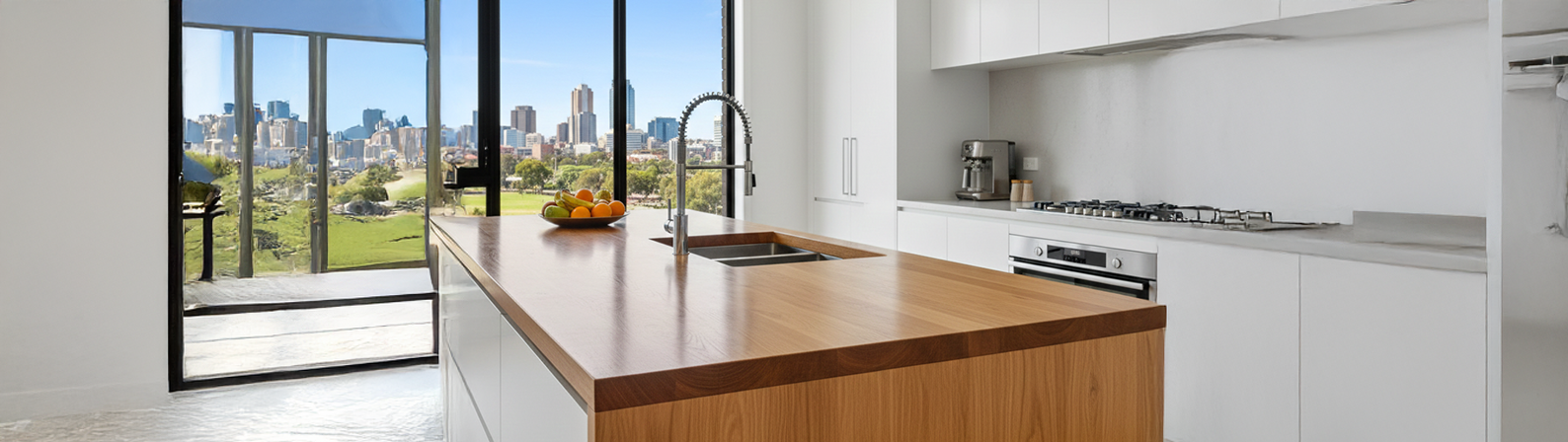
In kitchens, timber shelves floating against walls bring warmth to what’s often a hard, glossy space dominated by cabinetry and appliances. Displaying attractive crockery, glassware, or cookbooks adds personality.
In bathrooms, timber floating shelves provide storage without the heaviness of closed cabinetry. Folded towels, plants, and attractive storage containers keep essentials accessible whilst looking intentional.
In home offices, floating shelves offer flexible storage that adapts as needs change. Books, files, equipment, everything stays accessible without consuming floor space.
Read our article on Enhancing Your Space with Timber Floating Shelves to learn more about Timber Floating Shelves.
Common Mistakes With Timber Floating Shelves
Going too long without adequate support: People underestimate how much even light items weigh when spread across a long shelf. The result is visible sagging over time.
Choosing timber that’s too thin: Delicate shelves look elegant initially, but they flex when loaded and rarely age well. Slight sagging that’s barely noticeable at first becomes more obvious over time.
Ignoring grain direction: Timber grain running lengthwise provides more strength than grain running across the width. Quality makers pay attention to this.
Inadequate finishing: In kitchens and bathrooms, particularly, unsealed or poorly sealed timber absorbs moisture and oils, leading to staining or warping.
Poor bracket selection: The floating effect depends on hidden brackets that actually work. Cheap hardware fails, sometimes catastrophically. Quality brackets cost more but perform reliably.
Maintenance And Care
Timber floating shelves require minimal maintenance, but a few simple practices keep them looking good.
- Dust regularly with a soft, dry cloth. For kitchen timber shelves, wipe with a slightly damp cloth and dry immediately. Avoid excessive water exposure.
- Check periodically that shelves remain secure to the walls. Over time, brackets can loosen slightly, particularly if shelves carry heavy loads. Tightening mounting screws occasionally keeps everything safe.
- For water-based finishes, clean spills promptly. The finish protects the timber, but standing liquids eventually find their way through. Quick action prevents marking.
- Every few years, inspect the finish condition. High-use shelves, particularly in kitchens, may need finish touch-ups. This isn’t a sign of failure, it’s normal maintenance for timber in working environments.
Ready-Made Vs Custom Floating Shelves
Ready-made timber floating shelves offer convenience and immediate availability. They work well when your wall dimensions happen to match standard lengths and your aesthetic preferences align with what’s available.
Custom timber floating shelves make sense when you want specific lengths to fit your exact wall dimensions, particular timber species or finishes that aren’t available off-the-shelf, or thicknesses and depths tailored to your specific needs.
Custom work also means the timber is properly prepared and finished on all surfaces, including the hidden back edge. This complete sealing matters for longevity, particularly in kitchens and bathrooms.
Getting Floating Shelves Right
Timber floating shelves work well when properly planned and installed. They add warmth, create storage, and maintain clean lines that keep rooms feeling open rather than cluttered.The key is matching timber species, dimensions, and structural support to how you’ll actually use the shelves.
Display-only shelves in a bedroom have different requirements than heavily loaded kitchen storage or extensive book collections in a living room. Think through the practicalities alongside the aesthetics, and your floating timber shelves will perform well for decades.
Custom Timber Floating Shelves For Adelaide Homes
At STADC Surfaces, we create custom timber floating shelves tailored to your exact specifications. Each shelf is handcrafted in our Adelaide Hills workshop, designed to suit your space and built from quality timber species that perform well in Adelaide conditions.Whether you need a single feature shelf or a complete wall of floating shelves, we work with you to determine the right timber, sizing, and bracket systems for how you’ll actually use them. Contact us to discuss your timber floating shelves requirement or visit our Adelaide Hills factory to experience our craftsmanship firsthand.