Most people approach choosing kitchen benchtops by looking at materials first. Timber or stone? Granite or engineered stone? But material choice comes later. Several decisions need to happen before material selection even makes sense.
These earlier decisions determine which materials will actually work for your kitchen, your budget, and how you use the space. Getting these fundamentals right means your benchtop choice becomes clearer and easier.
Start with How You Actually Use Your Kitchen
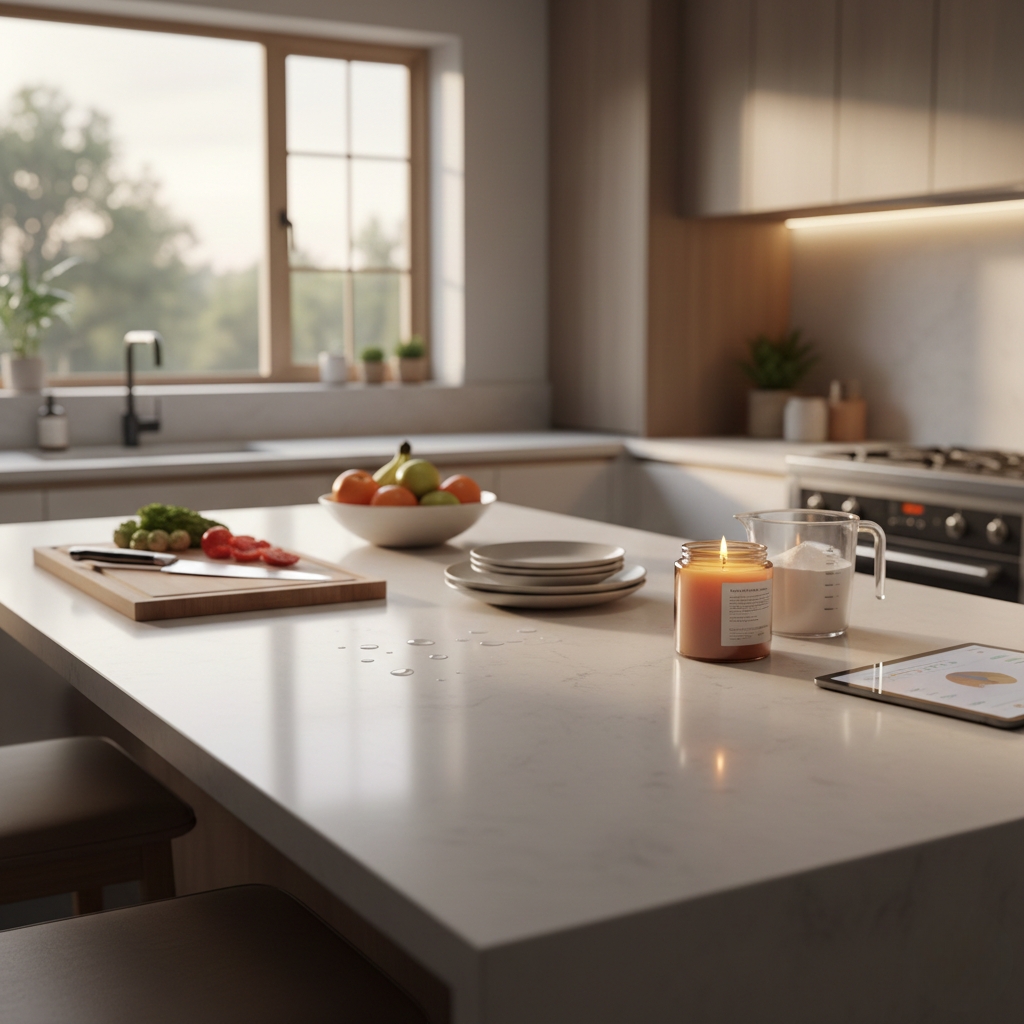
Before looking at samples or visiting showrooms, think honestly about your kitchen habits.
Understanding your actual use patterns helps eliminate materials that won’t suit your lifestyle, regardless of how attractive they look.
Heavy cooking households: If you cook daily, prepare multiple meals, and use the kitchen intensively, your benchtop needs differ from those of occasional-use kitchens. Heat resistance matters more. Durability under constant use matters more. Repairability might matter more than perpetual perfection.
Light use kitchens: Occasional cooking, mostly reheating, limited food preparation. Nearly any benchtop material handles this use level. Aesthetics and budget can drive decisions more than performance characteristics.
Baking and pastry work: Needs cool surfaces for pastry work. Stone naturally stays cooler than timber. Also needs a clear, uninterrupted workspace. Benchtop joins and seams matter more when you’re rolling dough across surfaces.
Multiple cooks: Families where several people cook simultaneously need generous benchtop space and durable surfaces that handle higher traffic and varied use patterns.
Define Your Budget (Including Installation)
Benchtop costs include more than the material price. So, the material that seems budget friendly might become expensive once fabrication and installation are added. A realistic total budget helps you understand which materials are genuinely affordable.
Material costs: This is what most people focus on. But it’s only part of the total expense.
Fabrication costs: Cutting to size, creating sink cutouts, shaping edges, and joining sections. Complex layouts cost more to fabricate than simple rectangles.
Installation costs: Professional installation isn’t optional for most benchtop materials. Factor this into budgets from the start.
Sink and tapware: Benchtop choice affects sink options (undermount vs top-mount). Sometimes existing sinks won’t work with the new benchtop material, requiring additional purchases.
Supporting structure: Heavy materials like stone might need cabinet reinforcement. Light materials like timber typically don’t.
Consider Your Kitchen Layout And Size
Understanding your layout helps identify which materials will actually work physically and financially in your space.
Small kitchens: Limited benchtop area means fewer joins, simpler fabrication, and often lower total costs. But small spaces also mean every centimetre of benchtop gets heavy use. Durability matters more in compact kitchens.
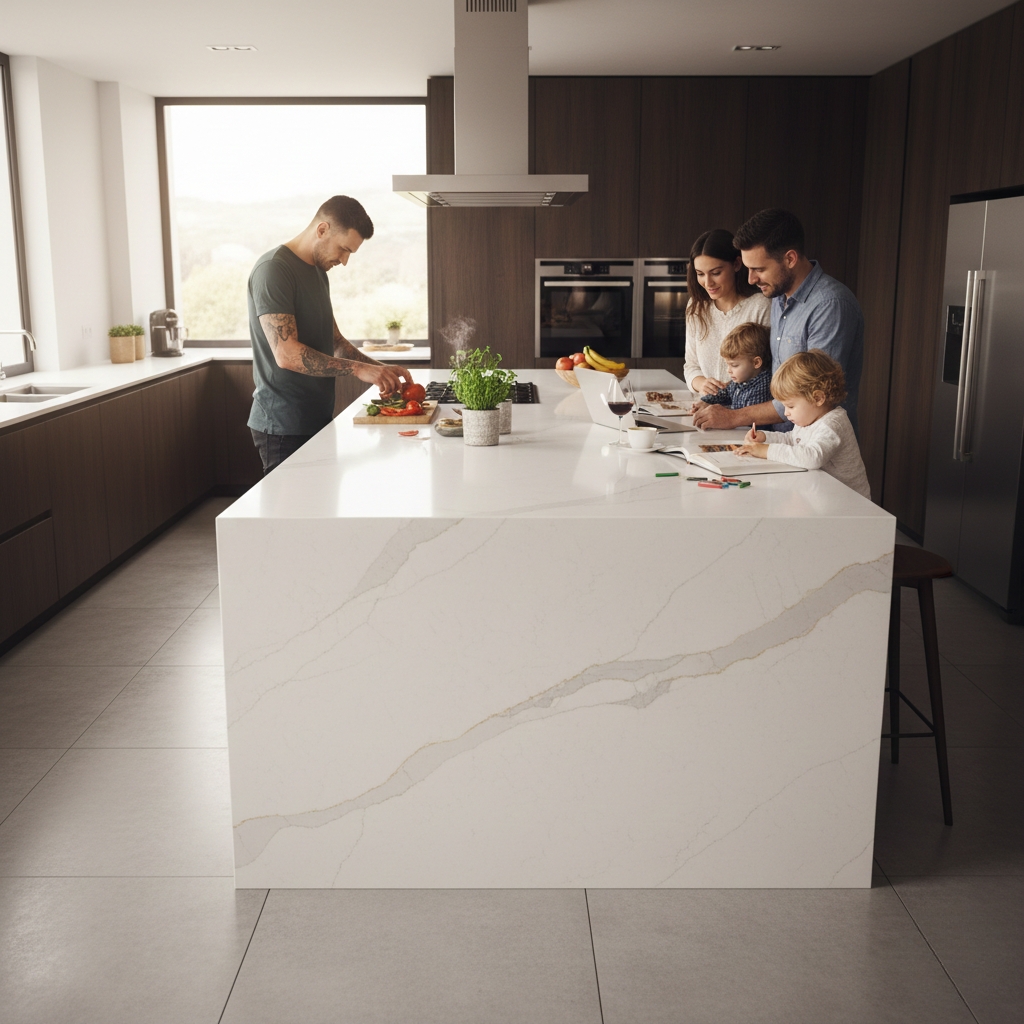
Large kitchens: More benchtop area means more material cost. But also more opportunities for different materials in different zones. Kitchen islands might use a different material than perimeter benchtops.
Complex layouts: Multiple corners, angles, or curves increase fabrication difficulty and cost. Some materials handle complex shapes better than others.
Existing plumbing locations: Where sinks and tapware currently sit affects benchtop installation costs. Moving plumbing to accommodate new benchtops adds expense. Working around existing positions saves money but limits design flexibility.
Think About Maintenance Willingness
How much time and attention are you willing to give your benchtops? Be honest here. Choosing a material that needs more maintenance than you’ll realistically provide leads to frustration and deteriorating surfaces.
High maintenance acceptance: Some people enjoy caring for materials. Oiling timber, sealing stone, and regular attention to finishes. If this sounds satisfying rather than annoying, materials like timber or natural stone become viable options.
Low maintenance preference: Want surfaces that need minimal attention beyond basic cleaning. This narrows options toward engineered stone, quality laminate, or very well-sealed materials that need infrequent resealing.
Somewhere between: Willing to provide basic care but not constant attention. This suits most materials when properly finished and installed.
Decide On Aesthetic Priorities
What matters more – warm, natural appearance or modern, polished look? Your aesthetic choice eliminates materials that won’t achieve the look you want, regardless of other characteristics.
Natural, warm aesthetics: Timber benchtops excel here. The grain, colour variation, and organic feel create kitchens that feel inviting. Natural stone also provides this, differently.
Modern, sleek aesthetics: Engineered stone, certain granites, and polished surfaces. These create contemporary, sophisticated spaces.
Traditional or heritage: Timber suits traditional kitchens beautifully. Certain stones (marble, granite) also work in heritage contexts.
Minimalist or industrial: Concrete, certain stones, and even timber, when finished appropriately. The execution matters as much as the material.
Consider Longevity Requirements
How long do you need this benchtop to last? Matching material choice to realistic longevity requirements prevents both overspending and undershooting on quality.
Forever home: Investing in quality materials that last for decades makes sense. Higher initial cost is justified by long-term use. Repairability becomes important because you’ll have these benchtops for years.
5-10 year home: Medium-term quality makes sense. Good enough to enjoy whilst living there, good enough to appeal to buyers when selling, but perhaps not premium investment-grade.
Rental property or flip: Budget-friendly materials that look good and function adequately for tenants or buyers. Longevity beyond 7-10 years isn’t the priority.
Short-term before major renovation: Least expensive functional option. This benchtop just needs to work until you do the full kitchen renovation in a few years.
Assess Your Kitchen’s Existing Conditions
Some practical factors affect benchtop choice.These existing conditions narrow viable options before you even consider material characteristics.
Cabinet condition: Strong, well-made cabinets support any benchtop material. Weak or damaged cabinets might need reinforcement for heavy materials, adding cost.
Ventilation quality: Good ventilation (windows, exhaust fan) means most materials perform fine. Poor ventilation that can’t be improved limits options to materials that handle perpetual humidity better.
Natural light: Affects how benchtop colours and materials actually look in your space. Dark materials in dark kitchens can feel heavy. Light materials in bright kitchens feel fresh.
Floor and cabinet colours: Benchtops need to work with existing elements unless you’re replacing everything. Some material colours coordinate better than others.
Understand Thickness Options And Visual Impact
Deciding on Benchtop thickness helps guide material selection and affects the budget significantly.
Standard thickness (40mm): Most common. Works in most kitchens. Cost-effective. Looks proportional in average-sized spaces.
Thick benchtops (60-80mm): Create a substantial, premium appearance. Popular in larger kitchens or for islands. Cost more (more material, heavier, more complex installation). Make bold design statements.
Thin benchtops (20-30mm): Modern, minimal look. Suit contemporary designs. Less common. Some materials don’t work well this thin.
Consider Edge Profile Preferences
Benchtop edges also affect material choice. If you know you want specific edge treatments, this narrows material options.
Simple edges (square, slightly rounded): Work with all materials. Keep costs reasonable. Suit modern and traditional designs.
Decorative edges (bullnose, ogee, bevelled): Possible with stone. Difficult or impossible with timber. Add fabrication costs. Suit traditional or luxury aesthetics.
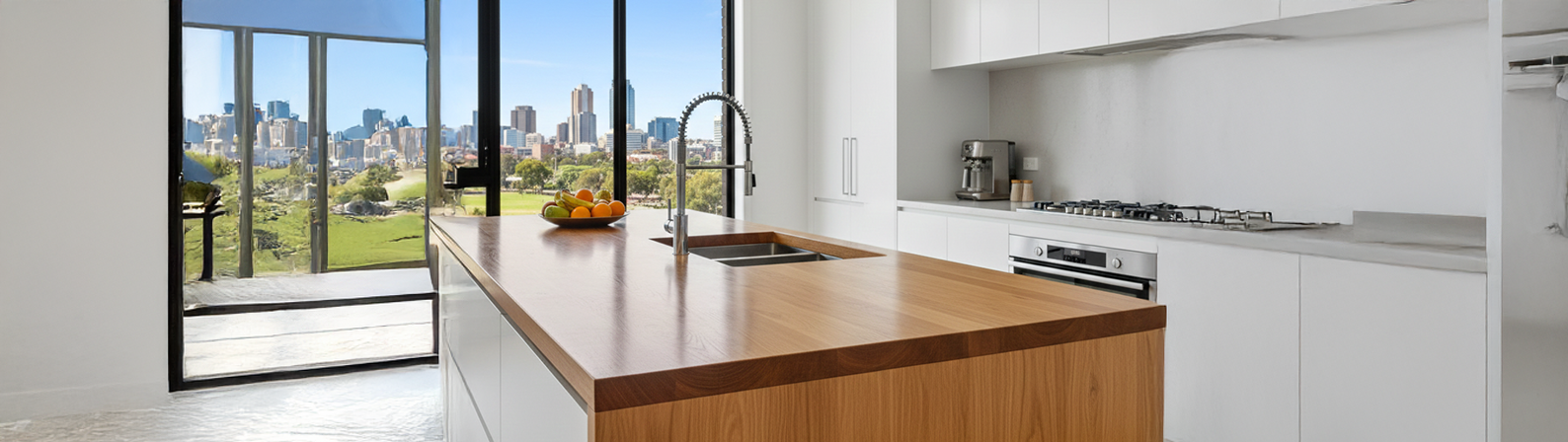
Waterfall edges: Benchtop material continues down the side of the island to floor. Possible with most materials, but it affects the cost significantly. Creates dramatic visual impact.
Think About Heat Exposure In Your Kitchen
How hot do things get where you cook? Heat patterns in your kitchen help prioritise which material characteristics matter most.
Gas cooktop users: Generate more heat than induction or electric. Benchtop areas near cooktops experience higher temperatures. Heat resistance matters more.
Induction or electric: Lower ambient heat. Most benchtop materials handle this fine with basic heat protection (trivets).
Bakers: Frequently need to place hot baking trays somewhere. Heat-resistant surfaces or dedicated heat-proof zones help.
Minimal cooking: Heat resistance becomes a less critical decision factor.
Evaluate Resale Considerations
If resale is a consideration, this affects how adventurous to be with material selection.
Premium materials: Quality timber appeals to buyers looking for quality finishes. This potentially adds resale value.
Standard materials: Good-quality laminate, standard stone is neutral for resale. They don’t detract and don’t particularly enhance.
Budget materials: Basic laminate, cheap stone might need replacing before selling to achieve the best sale price.
Personal/unusual choices: Very distinctive materials or colours appeal to some buyers, put off others.
Making The Actual Material Decision
Once you’ve worked through these considerations, material choice becomes clearer. You’ll know your realistic total budget. How do you actually use your kitchen? What maintenance level suits you? How long the benchtop needs to last.
Choosing Kitchen Benchtops for Your Adelaide Home?
At STADC Surfaces, we work with homeowners to understand these decisions before discussing material options. This ensures the benchtops we create actually suit how you use your kitchen, not just how it looks in photos.
We specialise in custom timber benchtops for Adelaide kitchens, but we’re realistic about when timber makes sense and when other materials might suit better. Contact us to discuss your kitchen benchtop requirement or visit our Adelaide Hills factory to experience our craftsmanship firsthand.