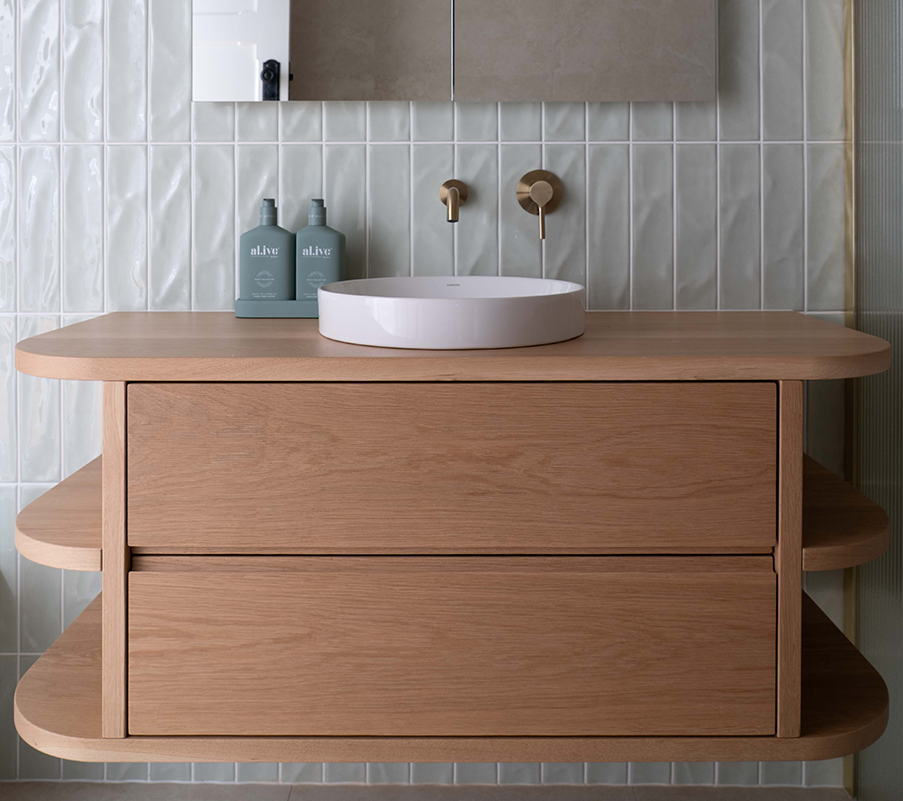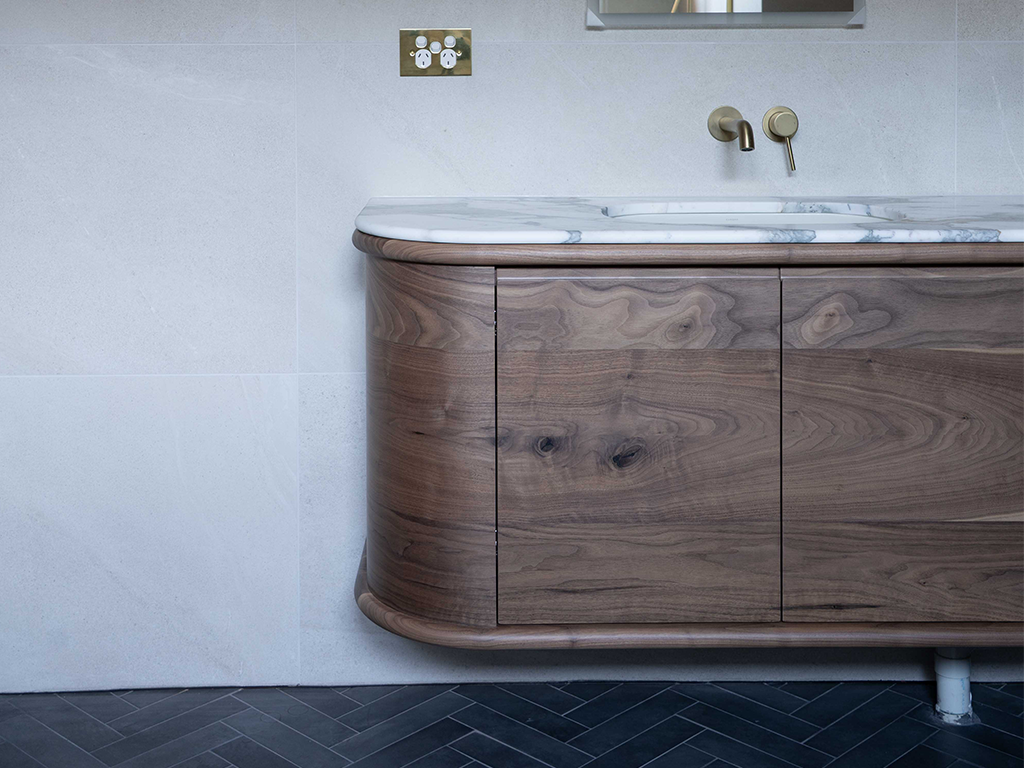
Choosing between a freestanding and wall-hung timber vanity is one of the more consequential decisions in a bathroom brief. The configuration determines how the room feels to use, how storage works, and how the timber sits within the space.
The vanity tends to anchor the room. When that piece is solid timber, the configuration decision carries more weight than it would with standard cabinetry, structurally, visually, and practically.
What Makes A Wall-Hung Timber Vanity Work
A wall-hung timber vanity is fixed directly to the wall, the floor left entirely clear beneath it. That gap makes cleaning easier and gives the room a quality of lightness. The installation requires solid wall construction or a structural backing frame capable of carrying the weight of the timber.
In older Adelaide homes where wall construction varies, this is worth confirming early. When the structural requirements are in place, the vanity can be set at precisely the height that suits the people using it. It suits contemporary interiors particularly well, and in rooms where floor space is limited, the floating configuration suits better practically and visually.
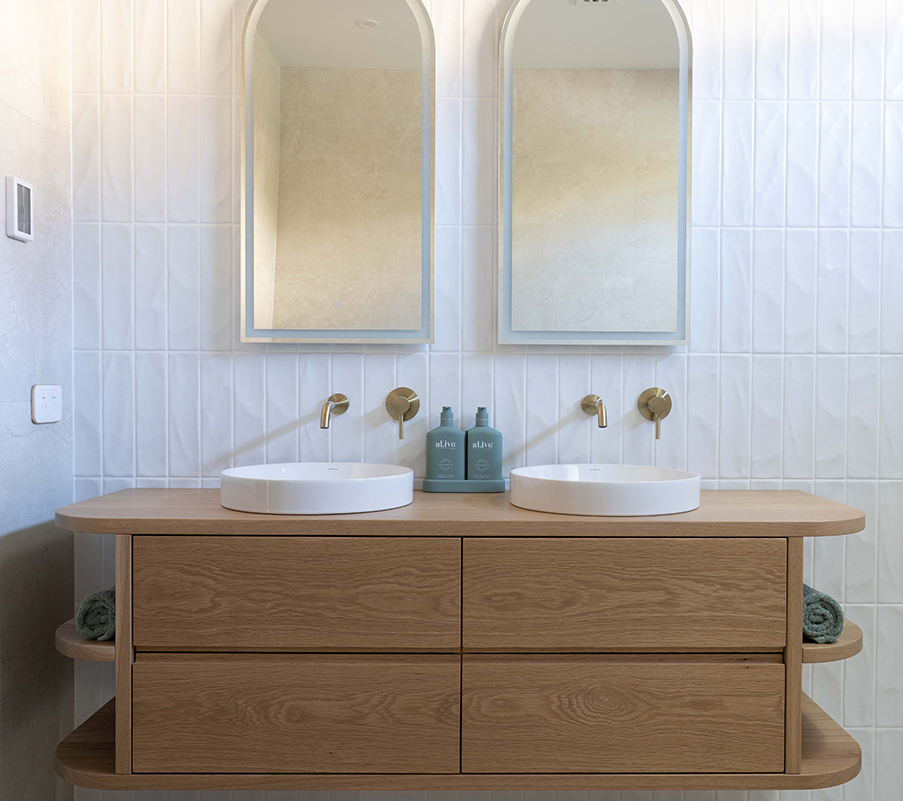
What Makes A Freestanding Timber Vanity Work
A freestanding timber vanity sits on the floor and is self-supporting. The installation is more straightforward across a broader range of wall types, which makes it a natural fit for older Adelaide homes where wall construction rules out a wall-hung configuration without significant preparation work. What a freestanding vanity offers beyond practicality is presence. A solid timber piece, particularly in American Walnut or Tasmanian Blackwood, reads across the full height of the cabinet.
The grain runs uninterrupted from top to bottom, the piece anchors the room, and the quality of the material is visible in a way that a smaller wall-hung profile does not always allow. Storage capacity follows the same logic. The full height of the cabinet is usable, the internal configuration can accommodate generous drawer arrangements and shelving.
Single Vanity Vs Double Vanity- How Configuration Fits Each
The single versus double vanity decision intersects naturally with the wall-hung versus freestanding question, and both are worth thinking through together rather than separately.
A freestanding double vanity unit is one of the stronger outcomes for a shared main bathroom.
The full width of the cabinet carries two basins comfortably, storage is generous across both sides, and the piece reads as a substantial, considered element in the room. Where plumbing runs through the floor and the room has the width to carry it, a freestanding double bathroom vanity is a resolved and practical choice.
A wall-hung configuration suits a single basin arrangement in most cases. The floating profile reads best when the cabinet stays clean and contained, and a single drawer with a single basin is exactly the kind of brief it is built for. For an ensuite or a bathroom used by one or two people, a wall-hung single vanity delivers a clean, elegant result.
Where a double wall-hung vanity is being considered, wall construction and structural backing become more critical, given the additional weight and span involved. That conversation is worth having early so the installation can be prepared correctly from the start.
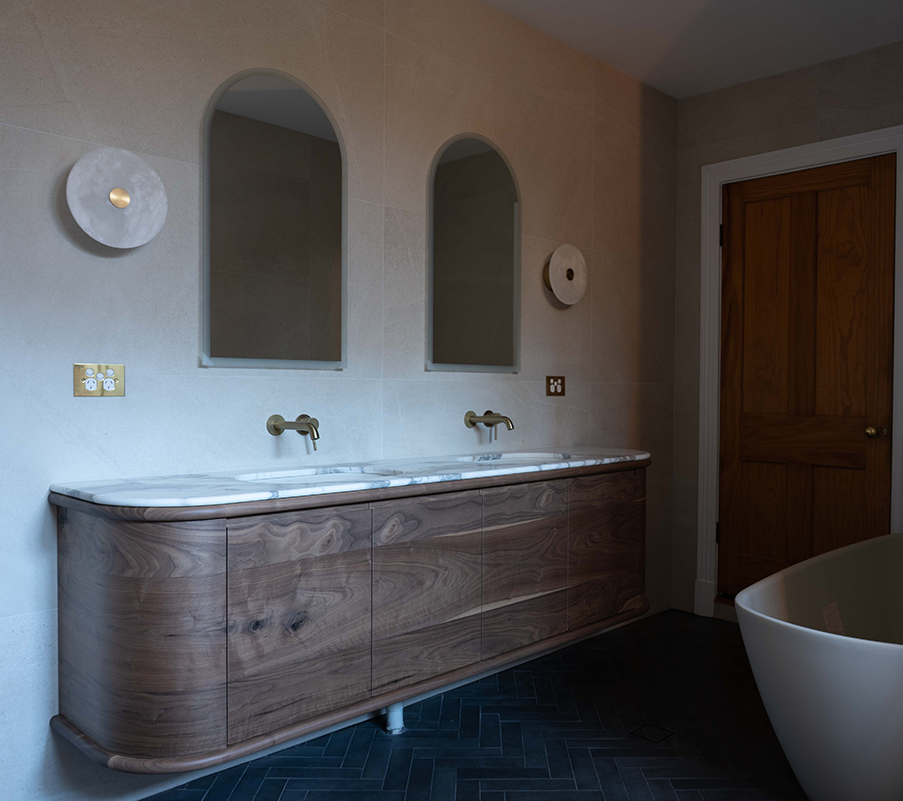
Storage And Configuration
Storage requirements deserve careful thought before a configuration is committed to, because the right option varies considerably depending on how the room is used.
A wall-hung timber vanity keeps storage contained and clean. Drawers and internal shelving sit within the footprint of the cabinet, the profile stays uncluttered, and for a bathroom with straightforward storage needs that is rarely a limitation worth worrying about.
A freestanding vanity opens up more configuration options. Full height drawers, divided internal storage, and deeper shelving are all more readily achieved. For a bathroom that needs to work harder across daily use by a household, those options matter.
At STADC Surfaces, every vanity is configured around what the space actually requires. The internal layout, the drawer arrangement, the proportions – all of it is built to the brief rather than pulled from a standard template. Whether the brief calls for a freestanding or wall-hung piece, that level of precision is one of the clearer differences between a custom timber vanity and anything available off the shelf.
Plumbing Position and What It Means for Your Decision
The plumbing position is one of the more practical constraints in this decision and worth understanding before the configuration is settled. Wall plumbing suits a wall-hung vanity naturally. Floor plumbing tends to suit a freestanding configuration, though either can be accommodated with the right planning.
For renovations where plumbing is being moved or updated as part of the project, locking in the vanity configuration before the plumbing work is confirmed avoids adjustments later that add unnecessary cost and time. For new builds the configuration can be planned without constraint and the plumbing positioned to suit. In that context, the decision sits entirely with the design brief and how the room needs to function.
Timber Species Across Both Configurations
Every species STADC works with is available in either a freestanding or wall-hung vanity. The choice comes down to grain character, colour depth, and how the timber reads in the light and scale of the room.
American Walnut carries deep chocolate tones and a fine straight grain that reads strongly across the full height of a freestanding cabinet. It is a species that rewards the larger surface a freestanding vanity provides, and the warmth it brings to a room is immediate.
Tasmanian Blackwood sits in a warm, golden-brown range with subtle figuring that becomes richer the closer you are to it. It works across both configurations and suits interiors where depth and warmth are brief rather than contrast.
American Oak and Tasmanian Oak both carry a lightness that reads particularly well in a wall-hung configuration. The pale, consistent grain complements the clean floating profile and suits contemporary interiors where the vanity needs to sit quietly within the broader design.
Wormy Chestnut brings the most individual character of any species in the range. The deep red veins, dark natural markings, and native worm strokes are visible from across the room, and that quality suits both a wall-hung vanity where the detail reads in a contained space and a freestanding piece where the full character of the timber is on show.
Quote Conversation
Room dimensions, wall construction type, plumbing position, basin preference, and storage requirements are the practical inputs that allow a configuration to be proposed and a quote to be produced. Having those details ready at the outset keeps the conversation focused and the process moving.
At STADC Surfaces, we specialise in custom solid timber furniture. If you are working through the decision between a freestanding and wall-hung vanity, or ready to explore species and configuration in detail, visit our Adelaide Hills workshop or get in touch to share your requirements with us.