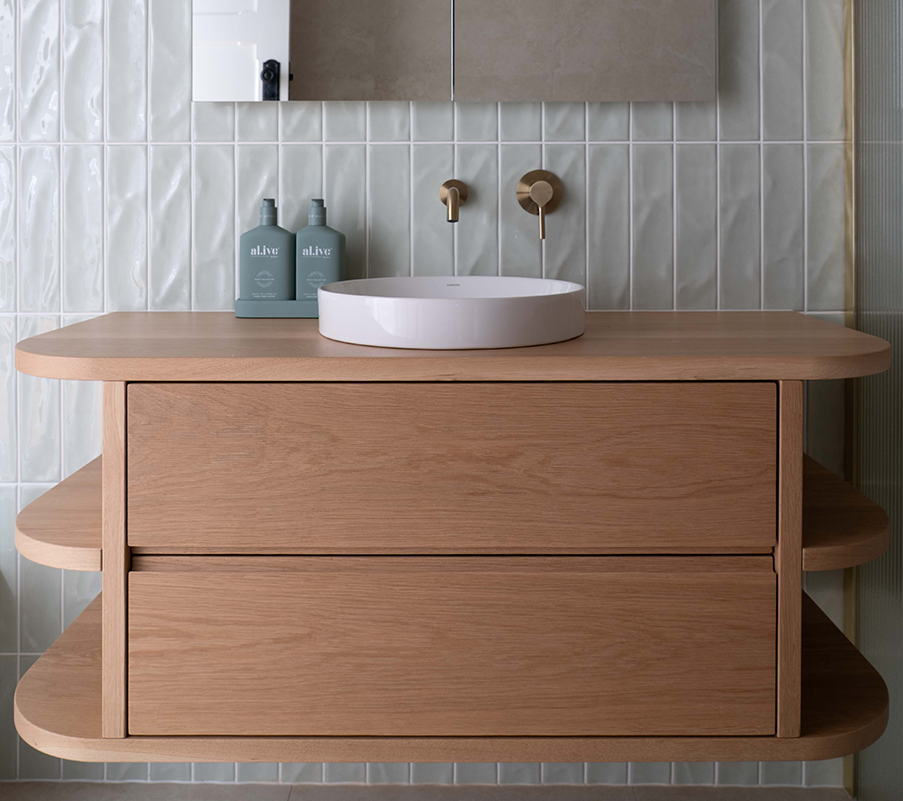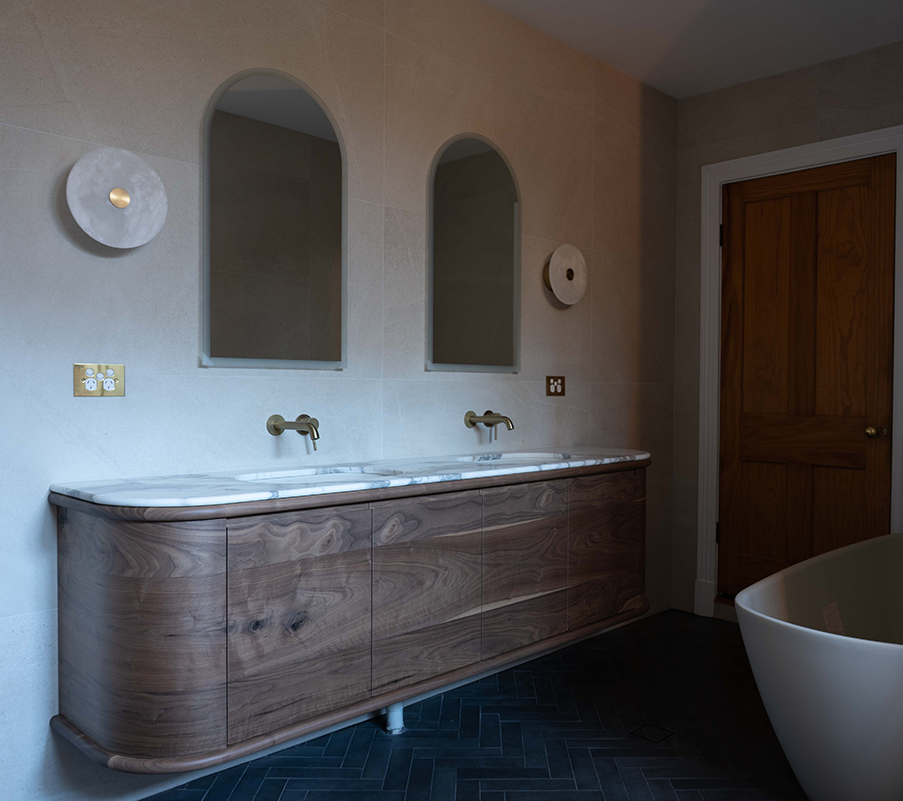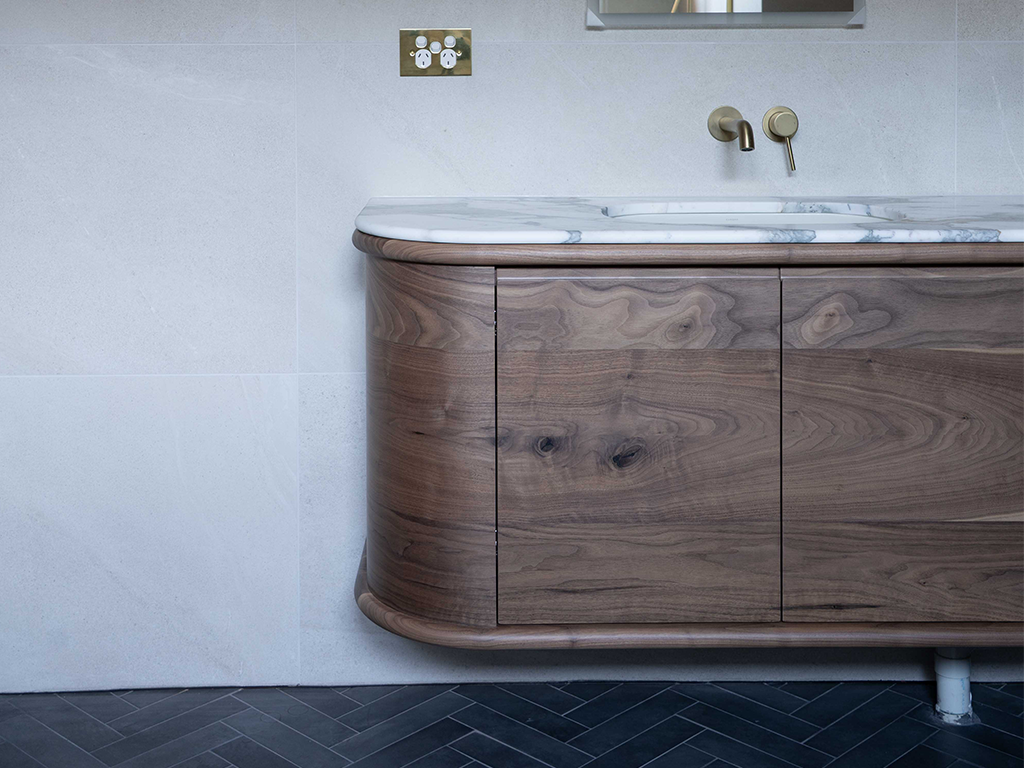
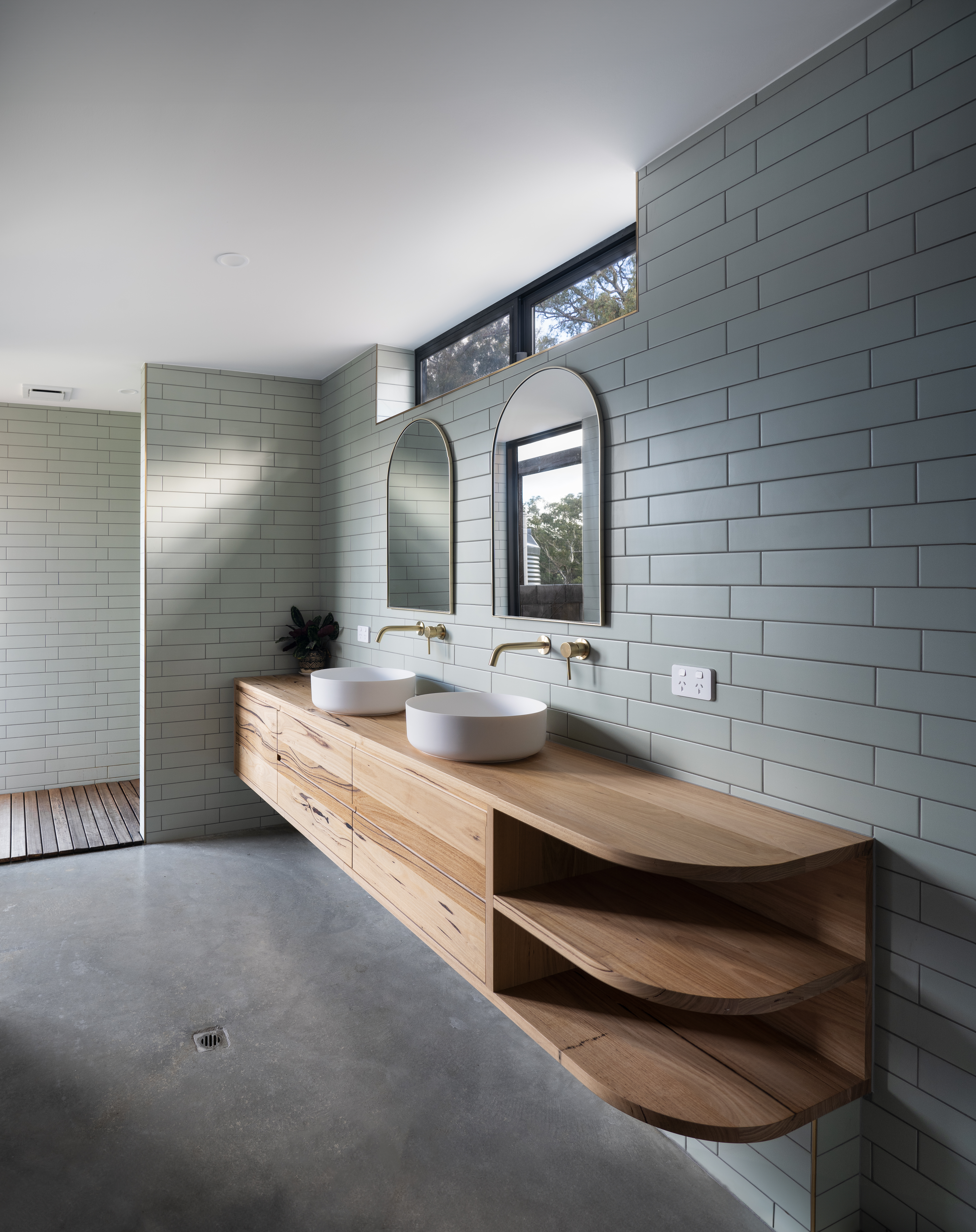
Wormy Chestnut timber furniture is the option people either love immediately or walk past without a second glance. It’s an Australian eucalypt with deep red veins, black markings, and native worm tracks through the grain. There’s nothing subtle about it. The character is pronounced, the texture is dramatic, and when used in the right space, it becomes the focal point of the room.
If you want a timber vanity, benchtop, or piece of furniture that looks handcrafted and genuinely one-of-a-kind, Wormy Chestnut is worth considering. If you prefer clean, uniform grain, it’s not.
Origin and Characteristics
Wormy Chestnut is an Australian eucalypt species harvested primarily from New South Wales and Queensland. The “wormy”refers to the native insect tracks (worm holes and tunnels) that run through the timber. These are a natural part of the species and are considered a feature, not a defect. Janka hardness sits around 900-1000, making it a medium hardwood.
It’s softer than American Oak or Blackwood but still durable enough for furniture and cabinetry. The colour palette is wide. You’ll see pale honey tones, deep reds, black streaks, gum veins, and everything in between, often within the same board. The grain is open and variable, with pronounced texture. No two pieces look the same, which is part of the appeal for people who want furniture with genuine character.

Understanding The Worm Tracks
The worm holes in Wormy Chestnut come from native insects (typically pinhole borers and powder post beetles) that inhabited the living tree. These tunnels are inactive once the timber is milled and dried. There’s no ongoing infestation or structural concern. The tracks appear as small holes (1-3mm diameter), dark lines through the grain, and occasional larger cavities. Some boards have minimal tracking, others have extensive patterns across the surface.
When we select Wormy Chestnut for a project, we fill all worm holes and cavities with clear or black resin before sealing. This prevents moisture ingress and creates a smooth, sealed surface. The resin becomes part of the design. Some clients prefer clear resin that shows the depth of the tracks, while others prefer black resin that emphasises the contrast.
Performance Across Different Applications
Vanities and Bathroom Cabinetry: Wormy Chestnut works well in bathrooms, though it requires more preparation than close-grained timbers. The worm tracks and natural voids are filled with resin before sealing to prevent moisture ingress, and we apply additional coats of our water-based polyurethane around any open grain areas.
Once sealed, it’s durable and moisture-resistant. The character suits bathrooms with raw plaster, stone tiles, terracotta, or an earthy palette. In a white-tiled, minimal bathroom, Wormy Chestnut can feel out of place.
Kitchen Benchtops: Wormy Chestnut works as a benchtop in kitchens where the aesthetic leans rustic or industrial. The red veins and black markings become part of the design rather than something to minimize. It’s not as hard as American Oak, so it will show surface wear more readily, but that’s often part of the appeal. Wormy Chestnut is timber that’s meant to age and develop patina.
For kitchen benchtops, we typically use boards with moderate rather than extreme character. Heavy worm tracking across a work surface can create an uneven texture that affects food preparation. We can select boards that balance character with practical function. If you’re deciding whether timber works for your kitchen, our blog post on choosing timber benchtops covers the key considerations.
Shelves and Furniture: For dining tables, sideboards, floating shelves, and console tables, Wormy Chestnut is exceptional. The grain and colour variation give each piece genuine individuality. We typically finish with a matte polyurethane, which protects the timber while keeping the natural texture and markings visible.
Does Your Space Suit Wormy Chestnut?
Not every interior aesthetic suits Wormy Chestnut, and that’s fine. Here’s how to know if it fits:
It works well in spaces with: Raw materials (exposed brick, concrete, stone), earthy colour palettes (terracotta, ochre, deep greens), textured finishes (rough plaster, aged metals), vintage or reclaimed furniture, layered, collected interiors rather than styled uniformity.
It doesn’t work well in spaces with: Scandinavian minimalism, clinical white bathrooms, contemporary grey-and-chrome kitchens, spaces where everything matches precisely, interiors that prioritize clean lines over texture.
If your bathroom or kitchen already has texture and warmth, Wormy Chestnut will feel at home. If your aesthetic leans minimal and monochromatic, it will feel jarring. When clients are uncertain, we recommend visiting the workshop to see Wormy Chestnut samples against photos of their space.
How Wormy Chestnut Ages
Wormy Chestnut darkens with age and UV exposure, developing richer red and brown tones over time. The worm tracks and black markings remain visible, and the overall character becomes more pronounced. Unlike uniform timbers that can look dated as trends shift, Wormy Chestnut’s character tends to feel more timeless. It looks handcrafted, whether it was built yesterday or ten years ago.
Surface wear blends into the natural variation of the timber rather than standing out. Scratches, dents, and marks become part of the patina, which is one of the reasons people choose it.
Maintaining Wormy Chestnut Timber Furniture
Maintenance is straightforward once the timber is properly sealed. For bathroom vanities and kitchen benchtops, wipe surfaces with a damp cloth after use. Clean spills promptly, particularly around basin areas where water pools. Use pH-neutral cleaners. Avoid bleach-based products or abrasive scrubs.
For furniture pieces (dining tables, sideboards, shelving), dust regularly and wipe with a slightly damp cloth as needed. The sealed surface resists most household spills when cleaned promptly. The resin-filled worm tracks are sealed beneath the polyurethane layer and won’t come loose or require maintenance. If the finish shows wear after years of heavy use, particularly around drawer fronts or high-contact areas, the surface can be lightly sanded and resealed. The character of the timber remains intact through refinishing.
Finish Options
Matte polyurethane is our standard finish for Wormy Chestnut. It protects the timber, fills the grain slightly to prevent moisture ingress, and doesn’t add gloss. Matte keeps the raw, textured quality of the timber visible.
Satin polyurethane can add a subtle sheen, though we generally recommend matte for Wormy Chestnut. The character of the timber works better without reflectivity. Oil finishes work beautifully on Wormy Chestnut furniture in dry areas. An oil finish brings out the reds and blacks dramatically and feels warm to the touch. For bathroom vanities and kitchen benchtops, we don’t recommend oil due to the open grain and maintenance requirements. Polyurethane provides better long-term protection.
Difference Between Wormy Chestnut, American OakAnd Blackwood
Clients often ask how Wormy Chestnut compares to more uniform species like Oak or Blackwood.
Colour: Wormy Chestnut is dramatically more variable than Oak or Blackwood. Where those species offer consistency, Wormy Chestnut offers character.
Grain: Oak and Blackwood have straight, predictable grain. Wormy Chestnut’s grain is irregular, with worm tracks, voids, and black markings throughout.
Aesthetic: Oak and Blackwood suit contemporary, Scandinavian, and minimalist interiors. Wormy Chestnut suits rustic, industrial, earthy, or bohemian aesthetics.
Preparation: Oak and Blackwood require standard sealing. Wormy Chestnut requires resin filling and additional coats around natural voids.
When Wormy Chestnut Is The Right Choice
Choose Wormy Chestnut if:
- You want timber with genuine character and one-of-a-kind grain
- Your bathroom or kitchen has an earthy, rustic, or industrial aesthetic
- You value handcrafted, textured materials over clean uniformity
Consider alternatives if:
- You prefer clean, consistent grain (American Oak, Blackwood, or Tasmanian Oak),
- Your space is minimal or Scandinavian in style
- You want timber that shows minimal surface wear over time.
Not Sure Which Timber Species Suits Your Space?
At STADC Surfaces, we specialise in custom solid timber furniture for Adelaide homes. We work through timber selection based on your project requirements, not just aesthetics. Hardness, grain, colour, and finish all affect how a piece performs in daily use, and we’ll walk you through what matters for your specific application.
Contact us to discuss your custom timber furniture requirement or visit our Adelaide Hills factory to experience our craftsmanship firsthand.