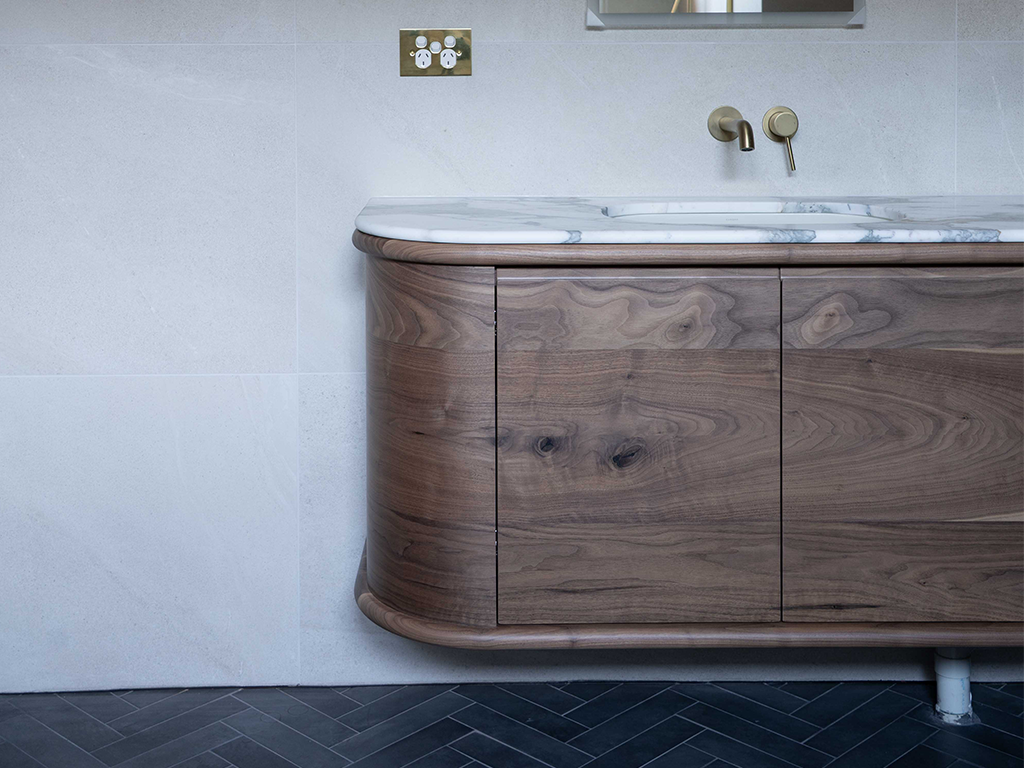
Run your hand across an oiled piece of American Walnut. There is no film between your skin and the grain. The timber is warm, almost soft to the touch, and the colour sits somewhere between dark honey and deep brown depending on the light. It is one of those materials that communicates quality before a single word is spoken about it.
That tactile quality is why people choose a solid timber vanity over every other material option. But the finish applied to that timber determines whether the piece lives up to what it promises, whether it holds up in a bathroom environment over years of daily use, whether it deepens and ages gracefully, and whether it feels the way it looked in the workshop when it first arrived.
Most clients planning a bathroom vanity in Adelaide think carefully about which species to choose. Fewer ask about the finish. This is worth changing, because the finish affects the result in ways that species selection alone doesn’t capture. Here is how the three main options actually differ.
Matte Polyurethane
A matte polyurethane finish sits on the surface of the timber as a hard, clear protective film. It creates a flat, non-reflective surface that lets the natural grain and character of the wood come through without any sheen competing with it.
For bathroom cabinetry Adelaide clients who want low maintenance above all else, matte polyurethane is the most practical choice. It is highly water-resistant, easy to wipe down, and holds up well against the humidity cycles a bathroom experiences daily. The surface coat absorbs the impact of water splashes, soap residue and cleaning products so the timber beneath doesn’t have to.
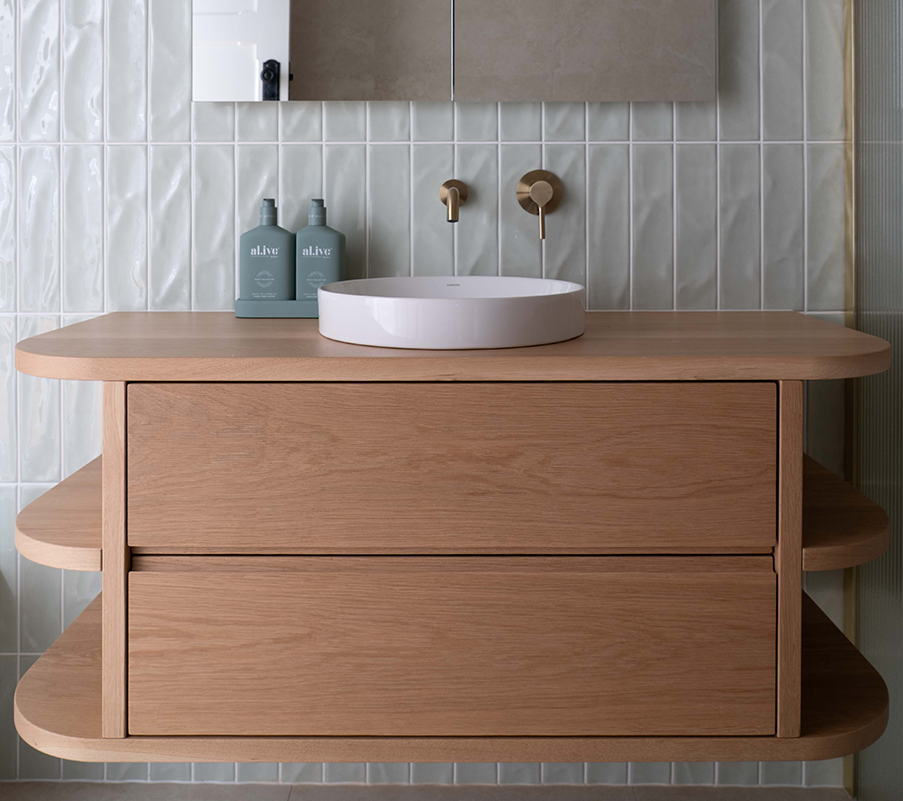
Visually, a matte finish on a custom bathroom vanity reads as handcrafted rather than manufactured. Under warm bathroom lighting, American Oak in matte polyurethane has a quiet, considered quality that suits contemporary bathrooms where the brief is restrained and precise.
One note – matte surfaces can show fine scratches more readily than satin because there is no sheen to diffuse the light. In a busy family bathroom, that is worth factoring in.
Satin Polyurethane
Satin sits between matte and gloss. It has a gentle, low sheen that catches light without being reflective in the way a high-gloss surface would be. The practical performance is similar to matte. Both are polyurethane coatings with strong moisture resistance. The difference is primarily visual.
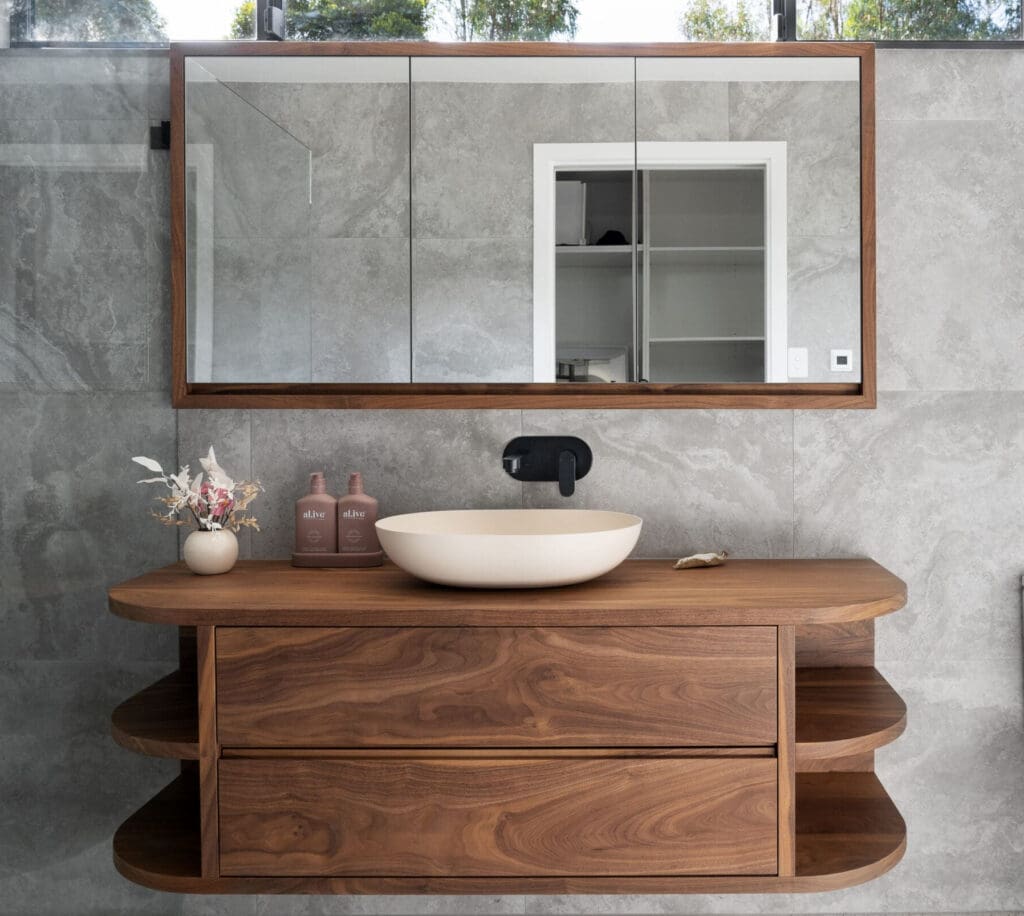
Satin brings a slightly richer depth to the grain, which works particularly well on darker timbers. A custom vanity Adelaide clients order in American Walnut or Tasmanian Blackwood under a satin finish has a warmth and presence that matte doesn’t quite replicate in the same species.
The low sheen reinforces the sense of quality without tipping into anything that feels showy.
It is the most commonly chosen finish for solid timber bathroom furniture in contemporary homes. It ages well, holds up under regular cleaning, and suits almost every design direction.
Hardwax Oil and Penetrating Oils
Oil finishes work differently from polyurethane. Rather than forming a surface coat, they penetrate into the timber fibres and cure within the wood itself. There is no film on the surface. The result is a finish that feels like timber because it largely is, and that tactile quality is something a coated surface cannot fully replicate.
For a custom bathroom vanity where the brief is luxurious, an oiled timber vanity is the premium choice. The visual result is distinct – oils deepen the colour of the timber, bring out the full range of the grain, and produce a finish that looks as though it has been lived with for years, even when it is brand new. Wormy Chestnut and Tasmanian Blackwood under hardwax oil are particularly striking.
The trade-off is maintenance. An oiled bathroom vanity Adelaide clients choose needs periodic reapplication, typically once every one to two years, depending on use. Water left sitting on the surface for extended periods can mark it. Habits matter: a quick wipe-down after heavy use keeps an oiled solid timber vanity in good condition for years. The maintenance is actual, but the finish is worth choosing.
Which Finish Suits Which Timber
American Oak takes all three finishes well. Under matte polyurethane, it reads clean and light.
Under oil, it warms considerably, which suits a bathroom with a more relaxed, natural palette.
Tasmanian Oak behaves similarly. Its slightly warmer tone benefits from satin or oil, where you want to bring that warmth forward rather than cool it down.
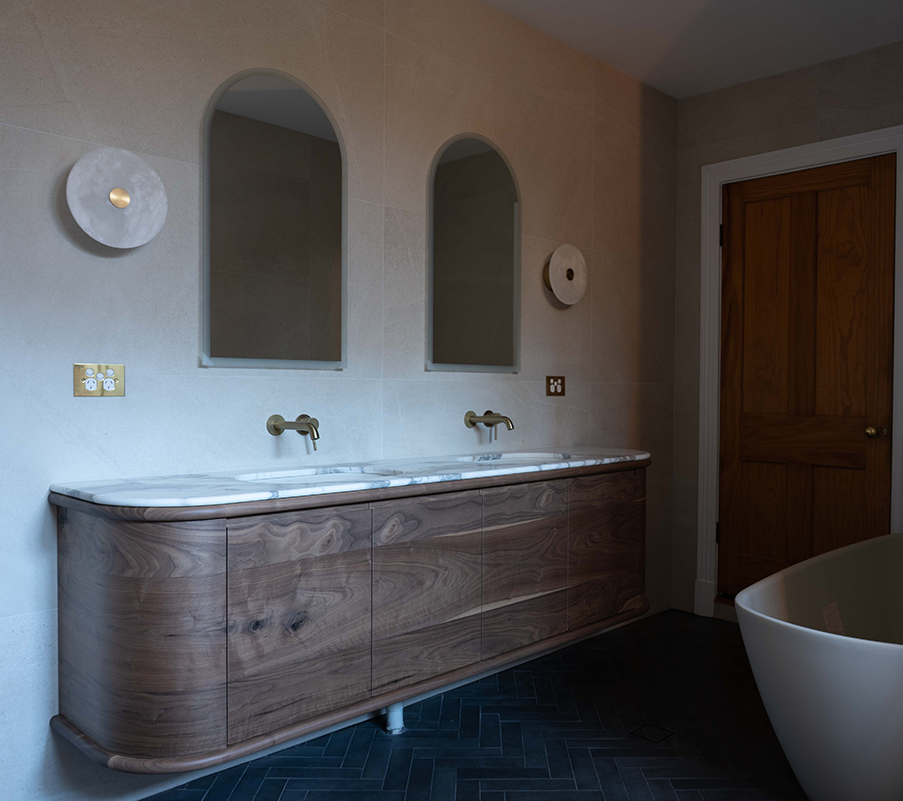
American Walnut looks exceptional under almost any finish, but oiled Walnut has a richness that is genuinely difficult to convey in a photograph. It is the kind of material quality that makes a bathroom vanity in Adelaide feel like a considered investment rather than a renovation line item
Tasmanian Blackwood’s grain variation reads most clearly under satin or oil. Matte works well where you want to soften the natural contrast within the boards.
Wormy Chestnut, with its distinctive markings and red-brown tones, tends to suit matte or oil finishes. The species has a strong enough character that adding sheen can feel at odds with what the timber is trying to do.
What We Recommend
For a low-maintenance family bathroom, matte or satin polyurethane is the sensible choice. For a carefully considered ensuite where the brief is the full solid timber bathroom experience, hardwax oil is worth the additional upkeep.
We work through finish options with every client at the design stage because it changes the result in ways that are hard to reverse once the piece is built.
At STADC Surfaces, we specialise in custom solid timber furniture for Adelaide homes. If you are planning a timber bathroom vanity and want to understand which finish suits your bathroom visit our Adelaide Hills workshop or get in touch for a consultation.